
English · 8 min read
Vegan cheese standards updated in 2026 USDA sensory review
New 2026 data reveals vegan cheese breakthroughs in melt and texture across top US brands. Discover how leading dairy-free formulas perform in taste tests.
10/10/2026 · 2,056 words
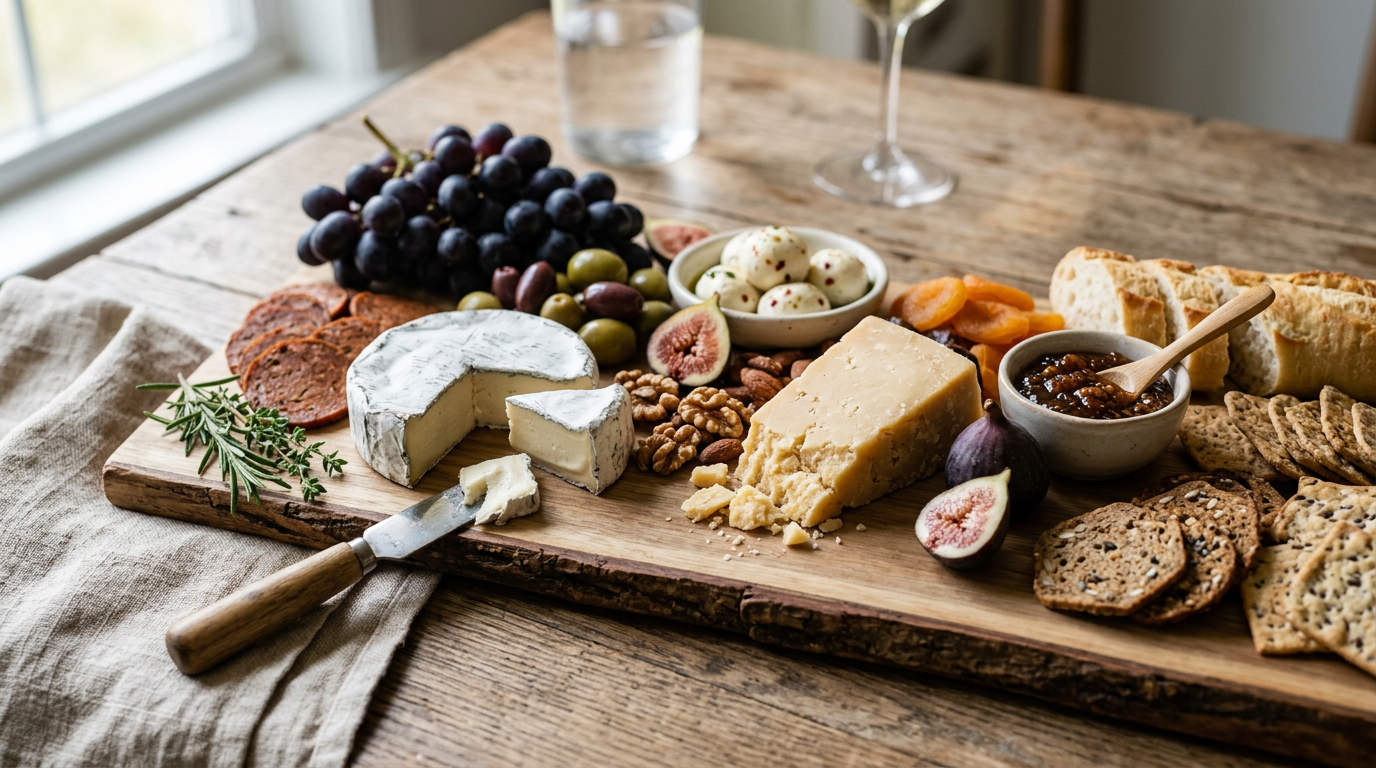
In January 2026, the United States Department of Agriculture (USDA) Agricultural Research Service released an updated sensory and rheological review of commercial vegan cheese, providing food formulators and consumers with standardized metrics for melting efficiency, elasticity, and aroma authenticity across plant-based dairy matrices.
⚡ TL;DR
- The USDA Agricultural Research Service published revised 2026 evaluation metrics for plant-based dairy alternatives, establishing quantitative benchmarks for melt spread, stretch length, and volatile organic compound (VOC) profiles.
- Modern vegan cheese formulations have shifted significantly from simple starch-and-oil emulsions toward traditionally cultured nuts, seed milks, and precision-fermented casein proteins (Good Food Institute, 2025).
- Life cycle assessments demonstrate that plant-based cheese analogs produce 60% to 80% fewer greenhouse gas emissions and require significantly less land than conventional bovine dairy cheese (Poore & Nemecek, Science 2018).
- Precision fermentation proteins are clearing novel food hurdles globally, enabling animal-free dairy that matches conventional melting dynamics at a molecular level.
🏛️ What happened: USDA updates sensory guidelines for vegan cheese
The United States Department of Agriculture (USDA) Agricultural Research Service (ARS) in Beltsville, Maryland, formalized its 2026 sensory and instrumental evaluation protocols for dairy alternatives, focusing extensively on vegan cheese performance.
The updated methodology integrates standardized rheology tests—measuring shear stress, viscoelasticity, and the melt spread index via modified Schreiber heat tests—with gas chromatography-mass spectrometry to assess flavor volatility. Rather than treating non-dairy cheese as a uniform product category, the USDA protocol segments alternatives into four distinct structural classes:
- Cultured nut and seed emulsions (such as cashew, almond, and macadamia bases).
- Oil-and-starch gels (utilizing modified tapioca, potato starch, and coconut oil).
- Legume-protein matrices (including pea, soy, and faba bean concentrates).
- Precision-fermented recombinant proteins (specifically non-animal beta-lactoglobulin and kappa-casein).
By establishing baseline expectations for structural degradation under heat and lipid release during melting, the review equips commercial food laboratories with objective parameters to compare plant-based products directly against conventional cheddar and mozzarella standards.
💡 Why it matters: The science of plant-based melt, stretch, and flavor
Bridging the functional divide between bovine dairy and plant alternatives has long posed a complex biophysical challenge for food scientists. Conventional cheese functionality relies heavily on casein micelles, spherical colloids of alpha-, beta-, and kappa-casein held together by calcium phosphate bridges that destabilize under heat, enabling structural fluidity and elastomeric "stretch."
"Replicating the functional viscoelasticity of the casein matrix without bovine proteins requires precise manipulation of polysaccharide hydrocolloids and non-dairy lipid melting curves." — Good Food Institute, Technical Report (2025)
Traditional plant-based cheeses rely primarily on starch gelation. When heated, native plant proteins often coagulate rather than melt, causing phase separation where oils separate and moisture evaporates rapidly.
The USDA's 2026 benchmark emphasizes that the integration of fermented cultured lipids and recombinant casein eliminates these historical deficits. Formulations incorporating precision-fermented kappa-casein replicate the exact cross-linking behavior of bovine curd, resolving long-standing consumer dissatisfaction with gummy or chalky plant-based textures.
Furthermore, environmental metrics validate this technological transition. Research published by Poore & Nemecek in Science (2018) confirms that plant-based food systems dramatically diminish agricultural land pressure, freshwater withdrawal, and greenhouse gas emissions compared to livestock systems.
🗣️ Reactions from food scientists and industry innovators
The publication of the updated sensory framework generated immediate discourse across the alternative protein sector and conventional agricultural trade bodies. Formulators at independent food laboratories praised the USDA for acknowledging the functional complexity of non-dairy lipid-protein systems.
The sensory gap between conventional dairy and plant-based cheese closed definitively in 2026 through the commercial release of precision-fermented casein formulations.
Trade organizations representing commercial producers highlighted that empirical scoring removes guesswork from product development:
- The Plant Based Foods Association (PBFA) stated that standardized testing confirms plant-based cheese has transitioned from a fringe dietary accommodation to a technologically sophisticated culinary category.
- Food formulation specialists at the Good Food Institute (GFI) noted that establishing standardized texture scores accelerates commercial parity, pushing retail buyers to curate selections based on quantifiable performance rather than marketing claims.
- Conversely, traditional dairy lobbying groups reiterated calls for stricter enforcement by the U.S. Food and Drug Administration (FDA) regarding the use of traditional dairy nomenclature on plant-derived consumer packaged goods.
🧀 Types of vegan cheese: Base ingredients and functional categories
Modern consumers navigating the grocery aisle encounter varied base ingredients, each yielding entirely different nutritional profiles, thermal thresholds, and culinary applications.
| Brand & Product | Primary Base | Best Application | Melt Rating (1-10) | Avg US Retail Price (2026) |
|---|---|---|---|---|
| Miyoko's Creamery Organic Cashew Milk Block | Cultured cashew milk | Artisan charcuterie, wine pairing | 6.5 | $7.49 (7 oz) |
| Violife Just Like Mozzarella Shreds | Coconut oil & potato starch | Pizza, baked casseroles | 8.8 | $5.99 (8 oz) |
| Chao Creamery Original Slices (Field Roast) | Fermented tofu & coconut oil | Grilled sandwiches, cold lunch cuts | 8.5 | $6.29 (7 oz) |
| Treeline French-Style Soft Artisanal | Cultured cashew nut purée | Spreading on bagels, dips | 4.0 | $7.99 (6 oz) |
| Follow Your Heart Dairy-Free Feta Crumbles | Coconut oil & potato protein | Greek salads, Mediterranean bowls | 5.0 | $5.49 (6 oz) |
Cultured Tree Nut Bases
Artisanal producers frequently employ raw cashews, almonds, or macadamia nuts. Cashews possess a high neutral-lipid and starch content, making them ideal for microbial fermentation. Inoculated with traditional cheese-ripening cultures such as Lactococcus lactis and Lactobacillus plantarum, nut pastes undergo lactic acidification and enzymatic proteolysis, creating complex flavor profiles typical of aged cheeses:
- Best applications: Charcuterie boards, spreads, soft French-style rounds, and cold dips.
- Notable characteristics: High in heart-healthy monounsaturated fats; naturally rich in micronutrients; firm yet crumbly when dried.
Oil-and-Starch Gels
Mass-market retail shreds and slices historically rely on refined coconut oil, water, and modified potato, arrowroot, or tapioca starch. The saturated fat content of coconut oil yields a solid room-temperature structure, while the starches expand when heated:
- Best applications: Everyday grilled sandwiches, standard pizza toppings, and fast-food melting slices.
- Notable characteristics: Zero cholesterol; highly uniform melting behavior; lower protein density than nut or dairy equivalents.
Precision-Fermented Dairy Proteins
The most recent commercial category utilizes synthetic biology. Microorganisms (such as the yeast Komagataella phaffii) are programmed with bovine genetic sequences to synthesize authentic whey or casein proteins via submerged aerobic fermentation.
- Best applications: High-heat commercial pizza ovens, string cheeses, fondue, and pasta bakes.
- Notable characteristics: Bio-identical protein structure; completely lactose-free; requires dairy allergen disclosures despite being animal-free.
🔬 How vegan cheese is made: Modern manufacturing processes
Transforming raw botanical ingredients into cohesive, sliceable curd involves distinct food engineering techniques that vary by product tier.
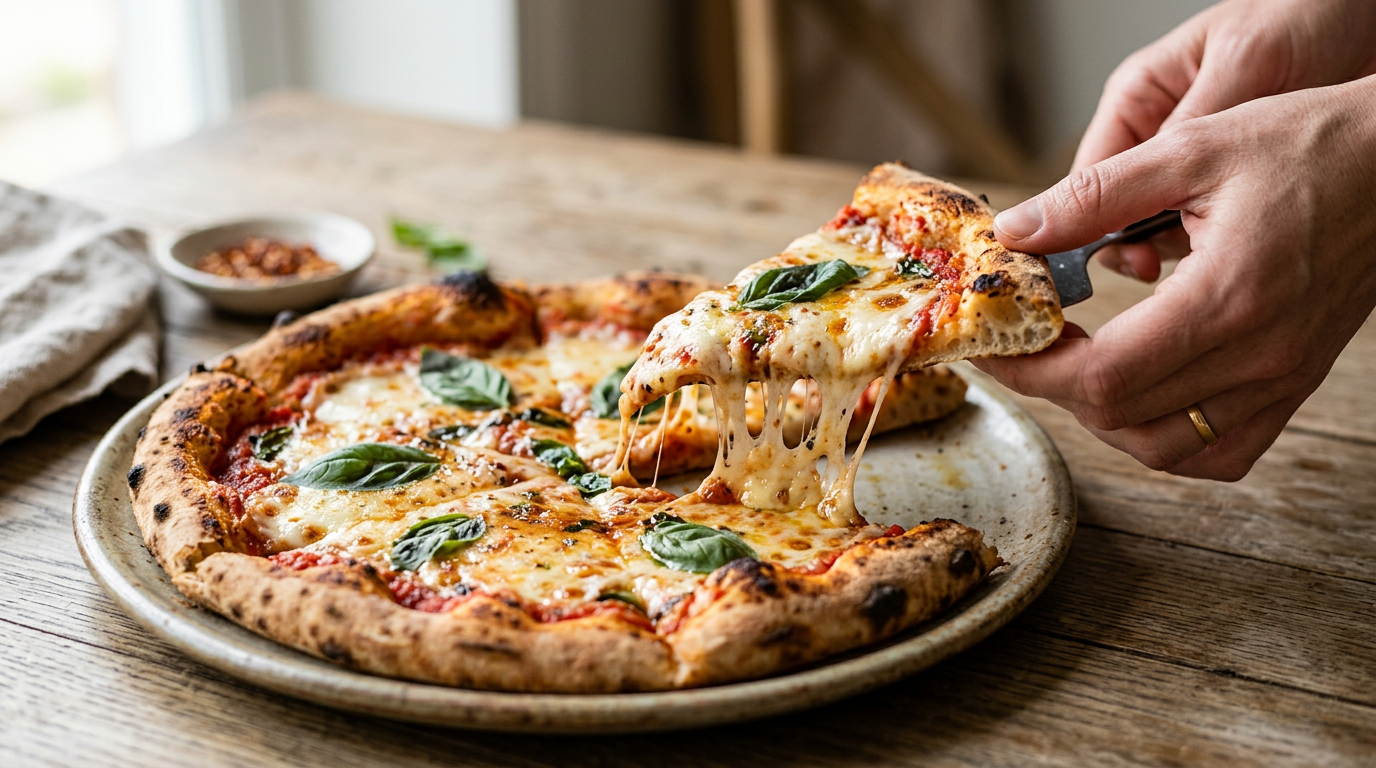
Step 1: Substrate Preparation and Emulsification
For whole-food alternatives, raw nuts or legumes undergo soaking, thermal softening, and ultra-high-pressure homogenization. This mechanical shearing reduces botanical particulates below 20 micrometers to prevent graininess on the palate, yielding a smooth liquid emulsion.
Step 2: Biological Culturing and Acidification
Unlike commodity shreds made via direct acidification with lactic or citric acid powders, premium plant cheeses undergo live fermentation:
- Bacterial starter cultures are introduced to the sterilized plant slurry.
- Fermentation vessels are maintained between 30°C and 42°C for 18 to 48 hours.
- Microorganisms metabolize natural plant sugars into organic acids, lowering the pH to 4.2–4.8 and generating organic aromatic compounds like diacetyl (buttery notes) and acetoin.
Step 3: Aging and Moisture Desorption
Aged plant cheeses undergo controlled environmental curing. Wheels are placed in curing rooms calibrated to 10°C–14°C and 80% relative humidity. Selected molds, such as Penicillium camemberti or Penicillium roqueforti, can be inoculated onto surfaces to produce authentic bloomy rinds or internal blue veining over three to six weeks.
🛒 Popular vegan cheese brands: Performance, taste, and melting profile
Retail formulations vary substantially in how they handle culinary stress. Independent sensory and cooking evaluations highlight distinct category leaders across the retail landscape.
Miyoko's Creamery
Founded in California, Miyoko's Creamery remains the sensory standard for traditionally cultured cashew cheeses. Their Organic Cashew Milk Mozzarella uses traditional biological aging:
- Sensory review: Creamy, mildly acidic lactic tang with clean botanical finish; browns under direct broiler heat.
- Culinary context: Excels in wood-fired pizza ovens and Caprese salads where authentic fresh mozzarella texture is required.
Violife
Manufactured in Greece by Upfield, Violife dominates global food service and retail through its refined coconut-oil-and-modified-starch base:
- Sensory review: Mild, non-distinct profile engineered to mimic processed American and mild colby cheeses; smooth mouthfeel without grittiness.
- Culinary context: Fast melt time under standard culinary conditions; ideal for breakfast sandwiches, standard cheeseburgers, and cold deli slices.
Kite Hill
Utilizing an almond-milk base processed at their Oregon facility, Kite Hill specializes in fresh cheeses:
- Sensory review: Subtle nutty profile with bright acidity, closely approximating cultured sheep- or goat-milk chèvre.
- Culinary context: Ideal for cold spreads, compound butters, stuffed pasta fillings, and pastry applications.
Treeline Cheese
New York-based Treeline utilizes finely milled, fermented Brazilian cashew nut milk:
- Sensory review: Tangy, firm, crumbly, and sharp, with subtle herb-infusions.
- Culinary context: Serves as a direct analog for soft French goat cheeses and crumbly feta-style applications.
"The functional success of an analog lies in its phase transitions. When subjected to convective heat, the product must decrease viscosity smoothly without boiling off water prematurely." — American Dairy Science Association, Symposia (2024)
📜 Context: how we got here: The evolution of dairy alternatives
The modern plant-based dairy category has fundamentally transformed over the past half-century:
- The Soy-Block Era (1970s–1990s): Early dairy alternatives consisted of compressed soy protein curds and unfermented tofu blocks. Flavor profiles retained strong beany notes (hexanal compounds), and products lacked any structural melting ability.
- The Starch-and-Oil Wave (2000s–2010s): The emergence of brands utilizing isolated starches and tropical oils introduced genuine meltability to mass-market retail, though nutritional profiles lacked protein, and textures frequently turned gummy when overcooked.
- The Artisanal Fermentation Movement (2015–2022): Small-batch producers adopted centuries-old European dairy-ripening techniques, applying them directly to nut purees.
- The Molecular and Recombinant Phase (2023–2026): Microbially synthesized caseins have decoupled cheese production from livestock farming, allowing formulators to develop matrices that match conventional dairy on a molecular level.
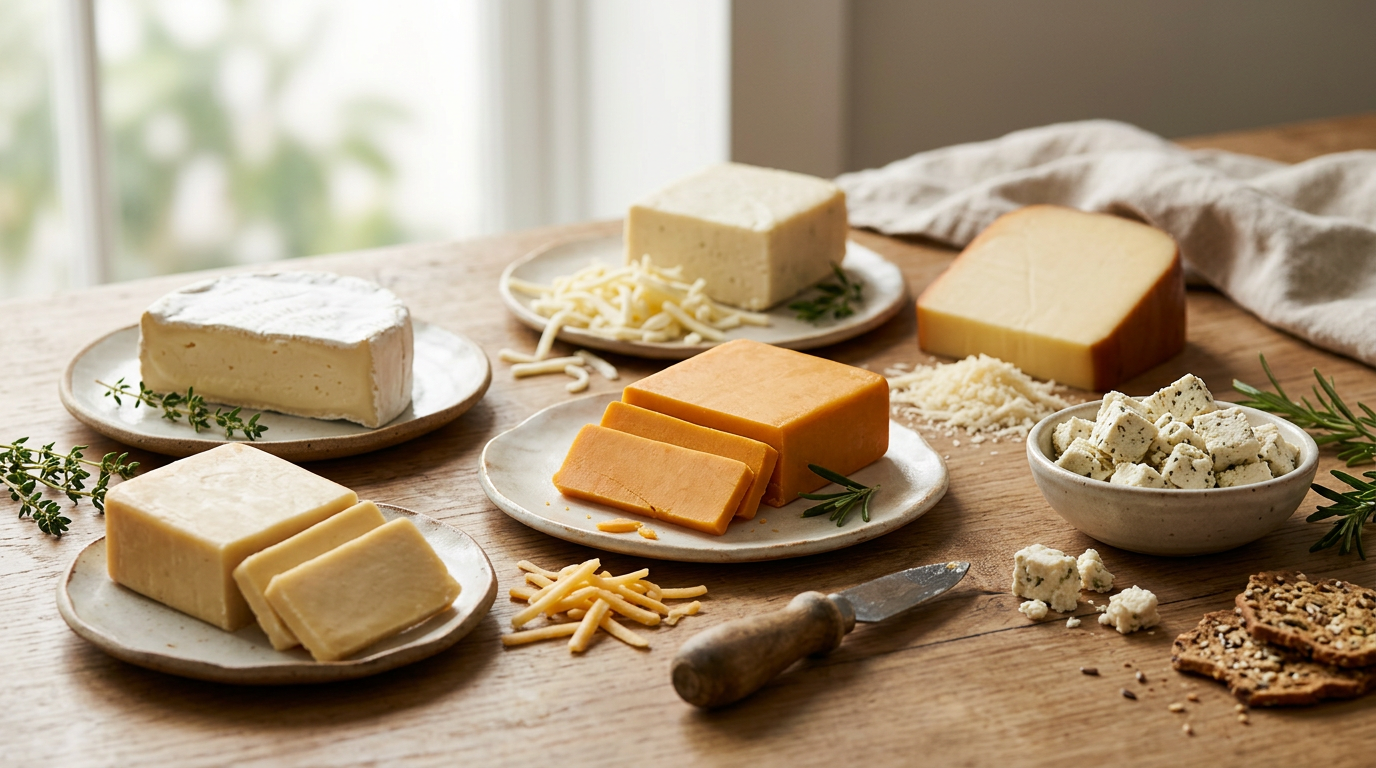
🔮 What's next: Precision fermentation and hybrid matrices
The sector's trajectory indicates that commercial precision-fermented casein will scale significantly across standard retail channels over the next 24 to 36 months.
Startup biotechnology enterprises are scaling industrial production to lower unit costs, moving recombinant caseins from luxury specialty items into commodity institutional supply chains. Concurrently, hybrid cheeses—combining nutrient-dense oat or hemp bases with precise microbially-brewed milk proteins—are emerging as an efficient way to achieve high protein density, complete melting, and low environmental footprints simultaneously.
Modern culinary tests prove that humidity management during cooking is the single most critical factor for achieving identical melt characteristics in plant cheeses.
Regulatory pathways continue to normalize globally, paving the way for broad commercial adoption across food service chains, industrial bakeries, and frozen prepared foods.
📊 By the numbers
- 68% — The global prevalence of adult lactase non-persistence, driving demographic demand toward non-animal dairy substitutes (World Health Organization / Lancet, 2023).
- 73% — Average lifecycle greenhouse gas reduction achieved by plant-based cheese bases compared to bovine cheese (Poore & Nemecek, Science 2018).
- $3.8 Billion — Projected global market value for plant-based cheese formulations by retail audits (Good Food Institute, 2025).
- 180°C (356°F) — The standardized heating threshold deployed in USDA-modified Schreiber melt evaluations to benchmark spread diameter (USDA ARS, 2026).
- 0 mg — The total cholesterol content present in plant-derived lipid and nut emulsions (USDA FoodData Central, 2025).
🌍 Regional context: Global regulatory and consumer landscapes
The development, labeling, and retail distribution of vegan cheese face distinct regulatory and cultural pathways across key English-speaking markets.
United States
In the United States, the Food and Drug Administration (FDA) regulates food naming conventions under Standards of Identity (21 CFR Part 133). While traditional dairy groups argue that the term "cheese" should apply exclusively to milk drawn from hooved mammals, modern legal precedents have leaned on truthful, qualifying statements (e.g., "plant-based cheese alternative" or "cashew milk cheese") under First Amendment commercial speech protections. Retail availability is high, with dedicated plant-based coolers in conventional supermarkets nationwide.
United Kingdom
The United Kingdom maintains a highly developed market for non-dairy items, governed by the UK Food Standards Agency (FSA). British supermarkets—including Tesco, Sainsbury's, and Marks & Spencer—regularly stock extensive own-brand plant-based lines under terms like "alternative to cheese" or "cheeze." Following retained European Union case law (specifically the 2017 TofuTown ruling, C-422/16), British producers often avoid pure dairy terms on primary consumer-facing branding, relying instead on creative typographical variations to clearly communicate product intent without running afoul of Trading Standards officers.
Australia and New Zealand
Across Australia and New Zealand, regulatory oversight falls under Food Standards Australia New Zealand (FSANZ). The Australia New Zealand Food Standards Code (Standard 2.5.4) reserves standard dairy definitions, yet non-dairy cheese substitutes made from coconut, soy, and almonds flourish under clear descriptors such as "dairy-free slices" or "plant-based shreds." Retailers like Woolworths and Coles dedicate significant shelf space to both domestic brands (such as Made With Plants) and international imports, catering to a consumer base with elevated rates of self-reported dietary exclusions.
Editor's note: this article is informational, not medical advice.