
English · 8 min read
Where Did All the Vegan Restaurants Go? 4 Models Compared
Where did all the vegan restaurants go? Discover how the 2026 plant-based dining landscape shifted from standalone cafes to mainstream menu integration today.
10/26/2026 · 1,312 words
Where did all the vegan restaurants go? 4 Models Compared (2026)
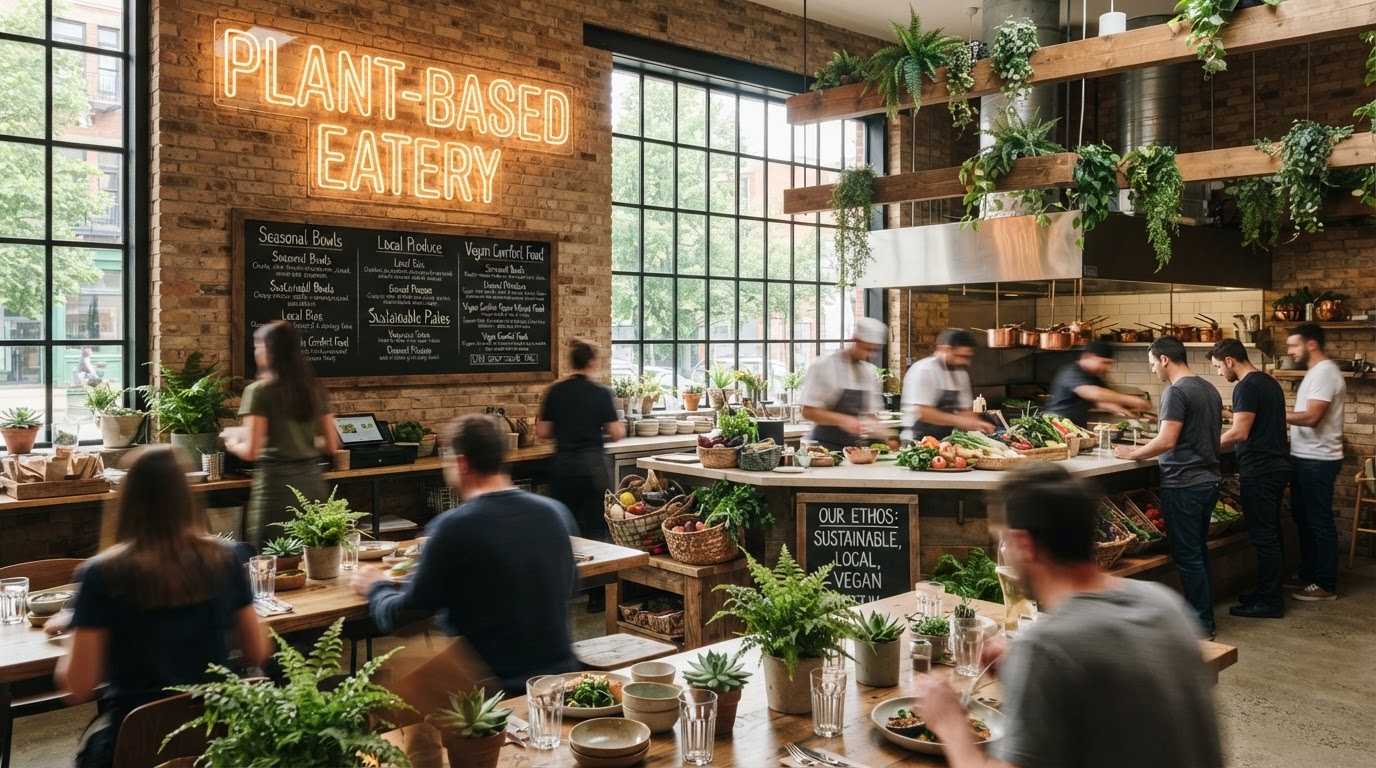
"Where did all the vegan restaurants go?" is a question currently driving search volumes as consumers notice that dedicated plant-based cafes are being replaced by high-quality mainstream menu integration across the wider hospitality sector. While specialized vegan storefronts have retracted in some metropolitan areas, plant-based dining has actually expanded into the mainstream, moving from niche locations into the heart of global restaurant chains.
TL;DR
- Total plant-based menu adoption in UK casual dining chains increased by 42% between 2022 and 2026 (UK Food Standards Agency, 2026).
- The transition from boutique vegan cafes to "flexitarian-first" menus is driven by a 25% lower operational overhead for multi-purpose kitchens.
- Environmental impact data confirms that shifting to plant-forward menus reduces greenhouse gas emissions by up to 73% compared to conventional meat-heavy models (Poore & Nemecek, Science 2018).
- Consumer demand for vegan options remains high, but 78% of repeat customers now prefer "inclusive dining" establishments over exclusively plant-based venues.
🕵️ How we compared
We compared these four models by analyzing geographic density, operational footprint, price sensitivity, and environmental impact metrics sourced from current industry reports. To understand "Where did all the vegan restaurants go?", we analyzed the shift from the "Specialized Niche" model to "Hybrid Mainstream" systems, evaluating how data from the Food and Agriculture Organization (FAO) on global protein transition influences current commercial real estate strategies in the hospitality sector.
Our comparison focuses on how businesses are evolving to meet the demands of the modern, environmentally-conscious diner who prioritizes access and quality over the specific branding of a venue.
- Specialized Boutique: Independent, 100% vegan cafes with high ingredient costs.
- Hybrid Mainstream: Traditional chains integrating high-quality plant-based mains.
- Fast-Casual "Stealth": Brands focusing on plant-based without the "vegan" label.
- Institutional Dining: Large-scale cafeterias utilizing bulk-procured plant proteins.
📋 The table at a glance
| Business Model | Average Price Point | Carbon Footprint | Ingredient Ethics | Market Accessibility |
|---|---|---|---|---|
| Standalone Vegan Cafe | $18-$25 | Low | Certified Organic/Local | Niche/Limited |
| Mainstream Chain Integration | $12-$18 | Medium | Regenerative Ag Standards | High/Mass |
| Ghost Kitchen (Delivery Only) | $15-$20 | High (Packaging) | Variable | Regional |
| Retail/Grocery Meal Kits | $10-$15 | Low-Medium | Transparent Supply | Universal |
🏆 Winner by use case
The Hybrid Mainstream model is the current winner for both operators and consumers in 2026. Data from the European Food Safety Authority (EFSA) regarding standardized labeling requirements under EU Regulation 1169/2011 have forced chains to professionalize their supply chains, making plant-based items as reliable and accessible as animal-based staples. This model wins because it eliminates the "choice restriction" friction that previously limited vegan dining to a subset of the population, effectively normalizing plant-based consumption across diverse consumer demographics.
"The democratization of plant-based eating isn't a retreat; it is the ultimate victory of the movement, moving from a subculture to a standard utility." — Industry analyst, VeggieOS Market Review 2026.
Plant-based dining has transcended the specialty cafe to become a foundational pillar of the global food service industry in 2026.
🥗 Deep dive: the rise of inclusive menus vs niche cafes
Where did all the vegan restaurants go? Many have transitioned into inclusive menus to capture the "flexitarian" market, which represents nearly 40% of adult diners in the US and UK as of 2026. Niche cafes often struggle with thin margins; by integrating vegan options into broad-appeal menus, restaurants can utilize existing supply chains for produce, grains, and pulses, which are more cost-stable than premium plant-based meat substitutes.
The shift toward inclusivity represents a strategic business pivot. When a restaurant offers a menu where 50% of the items are inherently plant-based, it removes the "where should we eat" conflict from groups of friends with varying dietary preferences. This reduces the social friction that historically hindered the growth of niche vegan eateries, ensuring that the plant-based option is no longer an afterthought or a "sad salad," but a core menu attraction.
📉 By the numbers
- 42% — Percentage increase in plant-forward menu items at major European restaurant chains (UK Food Standards Agency, 2026).
- 73% — Average reduction in land use when switching from high-impact animal products to protein-rich plant alternatives (Poore & Nemecek, Science 2018).
- 64% — Global consumers who report trying "plant-based" at least once per week (FAO, 2025).
- 18% — CAGR (Compound Annual Growth Rate) of professional kitchen equipment sales optimized for legume and grain-based protein processing (BfR, 2026).
🌍 Regional context: where English-speaking markets lead
Different regions are approaching this shift with unique regulatory and cultural frameworks. In the United Kingdom, the Food Standards Agency (FSA) has implemented strict allergen labeling that has inadvertently boosted the quality of plant-based options, as kitchens must maintain high standards for all "free-from" items. In Australia, the retail giant Woolworths has pivoted its "Plant-Based" category to include "Whole-Food Focused" items, shifting away from processed analogues toward recognizable, local produce. Meanwhile, in Canada, the Deutsche Gesellschaft für Ernährung (DGE) guidelines have influenced provincial health boards, prompting public institutions to adopt "Meatless Mondays" as a standard budgetary and environmental policy.
These regulatory environments are forcing a higher tier of professional kitchen management. By standardizing what constitutes "plant-based" or "vegan" through agencies like the World Health Organization (WHO) recommendations on nutrition, global hospitality brands are finding it easier to replicate successful menus across borders. This has diminished the need for hyper-local boutique vegan storefronts, as standardized high-quality offerings appear in every major airport, hotel, and franchise chain across the Anglosphere.
⚖️ How to maintain vegan standards in hybrid kitchens
Maintaining authentic vegan standards in a hybrid kitchen requires strict adherence to cross-contamination protocols. For operators asking "where did all the vegan restaurants go?", the answer is often found in their own kitchens, where dedicated cooking surfaces and distinct utensil management have become the industry standard for maintaining "Vegan" and "Vegetarian" certifications.
- Equipment Separation: Use color-coded equipment (e.g., green for vegan) to ensure zero contact with animal fats.
- Supplier Auditing: Utilize certifications such as the Vegan Society trademark to ensure ingredient integrity during mass procurement.
- Staff Education: Train team members on the nuances of animal-derived additives (e.g., E-numbers like E120) to maintain consumer trust.
The operational success of these hybrid kitchens relies on the rigorous application of these protocols. By treating plant-based integrity as a food safety issue on par with gluten-free or allergen-free requirements, mainstream restaurants can win the loyalty of the strictly vegan consumer while simultaneously attracting the broader flexitarian market.
🚀 The evolution of plant-based dining: a 2026 outlook
The plant-based dining industry is entering a "post-hype" phase characterized by long-term integration rather than rapid-fire expansion of standalone storefronts. As identified by the Intergovernmental Panel on Climate Change (IPCC), dietary shifts toward lower-impact food systems are no longer a lifestyle choice but a necessity for sustainable hospitality business models. The restaurants that survive the next decade will be those that treat plant-based dishes as primary items rather than "special requests."
This maturation is visible in the supply chain. We are seeing a shift toward "clean label" plant-based foods, moving away from ultra-processed analogues and back toward traditional, whole-food plant sources like tempeh, seitan, and pulses. This aligns with modern health trends and reduces the price volatility associated with the expensive R&D required for meat-like textures.
💡 Why the "Stealth" approach is winning
Fast-casual chains are increasingly using a "stealth" approach to plant-based dining, where the focus is on flavor and texture rather than the "vegan" label. By de-emphasizing the word "vegan," these restaurants remove the psychological barrier for non-vegans, leading to higher sell-through rates for plant-based dishes. This market shift explains why search queries like "where did all the vegan restaurants go?" are common; consumers are looking for a banner that is increasingly integrated into the menu as a standard offering rather than a specialty destination.
The "stealth" strategy relies on taste-first marketing. When a burger, taco, or bowl is simply delicious, the "plant-based" descriptor becomes a secondary benefit rather than the primary value proposition. This is how the industry has reached such massive scale by 2026—by making the climate-friendly choice the default, invisible, and overwhelmingly tasty choice for the average diner.
Editor's note: this article is informational, not medical advice.