Italian · dinner
Hearty Vegan Lentil Bolognese
A rich, slow-tasting bolognese made with brown lentils, mushrooms and tomato. High in protein and fibre, and it freezes well.
Jump to recipe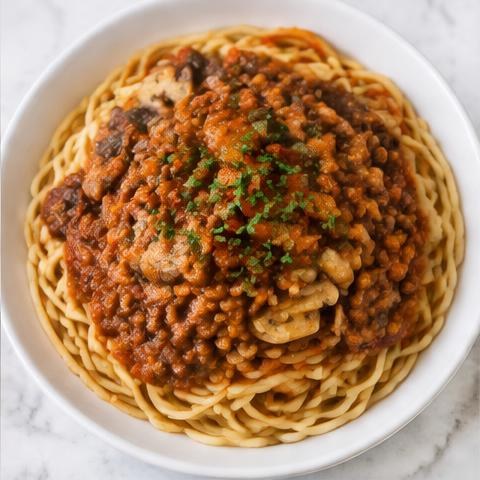
- Prep
- 10 min
- Cook
- 35 min
- Prep + cook
- 45 min
- Serves
- 4
Soaking, resting, cooling and chilling may take extra time; see the cooking guide below. Approximately 480 kcal per serving, excluding optional sides and toppings.
Ingredients
Method
- Heat the oil in a large pot. Cook the onion, carrot and celery over medium heat for 6 minutes until soft.
- Add the mushrooms and cook until their liquid evaporates and they start to brown, about 6 minutes.
- Stir in the garlic and tomato paste and cook for 1 minute until the paste darkens.
- Add the lentils, tomatoes, broth, soy sauce, oregano and bay leaf. Simmer, partly covered, for 25–30 minutes until the lentils are tender and the sauce is thick.
- Meanwhile cook the pasta. Remove the bay leaf, season the sauce and toss with the drained pasta.
Cook's notes
- Soy sauce adds the savoury depth that meat normally brings — don't skip it.
- Keeps 4 days in the fridge or 3 months in the freezer.
Why this recipe works
This vegan lentil bolognese functions as a nutritionally dense and structurally satisfying alternative to traditional meat-based sauces. The combination of brown lentils and finely minced cremini mushrooms provides a dual-texture profile; lentils contribute a firm, meaty bite, while the browned mushrooms offer a deep, umami-rich base that mimics the savory foundation of ground beef. By using dried brown or green lentils rather than canned, you maintain greater control over the final texture, ensuring the legumes remain distinct and al dente rather than mushy when simmered in the tomato base.
The secret to the depth of this sauce lies in the strategic layering of aromatics and concentrated ingredients. Starting with a classic Italian soffritto—onion, carrot, and celery—builds a sweet, vegetal backbone that is then intensified by caramelizing tomato paste and deglazing with liquid. The inclusion of soy sauce is not merely a salty addition but a vital source of glutamates, which bridge the flavor gap typically filled by slow-cooked meat. This recipe thrives on the 35-minute active cooking time, allowing for a concentrated, thick consistency that clings perfectly to pasta strands.
Total preparation and cooking time for this dish is approximately 45 minutes, excluding pasta boiling time. While the recipe does not require pre-soaking of the dried lentils, a thorough rinse is essential to remove dust and debris. Because the recipe relies on moisture absorption to cook the lentils directly in the sauce, you should account for the consistency of the final product before serving; if the mixture appears too thick during the final minutes of simmering, an extra splash of broth will help reach the ideal coating viscosity.
Ingredient choices and preparation
The selection of brown or green lentils is deliberate for this recipe, as they possess high starch content and structural integrity, preventing them from disintegrating under extended heat. When selecting mushrooms, cremini are preferred over white button varieties for their more robust, earthy flavor and firmer water content, which browns more effectively during the sauté phase. Always ensure the mushrooms are finely chopped to a consistent dice, roughly the size of the lentils, to ensure the sauce has a uniform, meaty mouthfeel that distributes evenly across every forkful of pasta.
The aromatics—onion, carrot, and celery—form the structural heart of the sauce. For optimal results, dice these into small, uniform pieces to ensure they soften simultaneously without leaving large, crunchy bits in the final sauce. Garlic should be minced finely or pressed to ensure it integrates seamlessly into the sauce base. Using a high-quality vegetable broth is recommended as it provides the primary seasoning profile for the lentils; if you are sensitive to sodium, select a low-sodium broth to maintain better control over the final seasoning balance after the sauce reduces.
Tomato paste and crushed tomatoes serve different roles in this dish. The tomato paste must be cooked until it darkens in color to remove the raw, metallic acidity of the concentrated tomato, creating a deeper, jammy sweetness. The crushed tomatoes provide the acidic liquid needed to braise the lentils. Soy sauce contains gluten and serves as the essential umami agent; if you require a gluten-free version, use explicitly gluten-free tamari. The oregano and bay leaf introduce herbaceous notes that cut through the richness of the mushrooms, balancing the overall flavor profile of the dish.
Equipment and kitchen setup
For this bolognese, a heavy-bottomed Dutch oven or a large, wide-diameter stainless steel skillet is ideal. The surface area of a wide pot facilitates better evaporation, which is critical for concentrating the sauce and browning the mushrooms without steaming them. A heavy base ensures even heat distribution, preventing hot spots that might cause the tomato paste to scorch or the lentils to stick to the bottom of the vessel during the simmering phase.
Standard kitchen tools required include a sharp chef’s knife for precise dicing of the mushrooms and aromatics, a cutting board, and a wooden spoon or silicone spatula for scraping the fond from the bottom of the pot. Because the recipe calls for boiling 400g of pasta, a large pasta pot with at least 4 to 5 liters of water capacity is necessary to ensure the noodles cook evenly without clumping. Keep a fine-mesh colander handy to drain the pasta immediately once it reaches an al dente state.
Ensure your workspace is organized before heating the oil, as the initial sautéing stages move quickly. Have all chopped vegetables pre-portioned in small bowls, and ensure the broth and tomatoes are within arm’s reach. A lid for your pot is necessary for the final 25-minute simmer to trap steam, allowing the lentils to cook through thoroughly. If your pot does not have a lid, a sheet of parchment paper pressed against the surface of the liquid can serve as a makeshift cover to retain moisture and heat.
Cooking technique in detail
The technique centers on the Maillard reaction, which is achieved in two distinct stages. First, the onion, carrot, and celery must be cooked until they reach a translucent, golden state, which releases their natural sugars. Second, the mushrooms must be cooked until their moisture evaporates completely and they begin to sear. Do not rush this step; the mushrooms will shrink significantly and their color should transition to a deep, dark brown. This concentrated flavor is what gives the sauce its complexity and ensures it does not taste watery.
Deglazing and simmering represent the second phase of the cooking process. Adding the tomato paste directly to the sautéed vegetables and mushrooms allows it to coat the pan; stir continuously for one minute. The acidity from the crushed tomatoes and the salinity from the broth then help lift the caramelized bits from the bottom of the pot. When adding the lentils, ensure they are fully submerged in the liquid. The simmer must be gentle; a vigorous boil can break down the lentils too quickly, leading to a mushy, porridge-like consistency.
Adjust seasoning after reduction so the sauce does not become too salty. Salt generally does not need to be withheld to prevent tough lentil skins. Acidic tomatoes can slow lentil softening, however. Simmer until the lentils are completely tender, adding liquid and time as needed. For predictable timing, cook lentils until tender separately before combining with the tomato sauce. Remove the bay leaf before serving over pasta.
What to look for
Sautéing the soffritto
The onions become translucent and the carrot/celery pieces soften, signaling the base is ready for mushrooms.
Browning mushrooms
All mushroom liquid evaporates from the pan and the pieces start to appear dark brown and slightly charred.
Simmering the lentils
The sauce reduces to a thick, spoonable consistency and the lentils are soft enough to crush between your fingers.
Final assembly
The pasta is cooked to al dente and immediately tossed with the sauce so the starch helps the sauce adhere.
Serving ideas and variations
This vegan lentil bolognese is a versatile main course that pairs best with classic pasta shapes such as spaghetti, tagliatelle, or pappardelle, which have sufficient surface area to trap the thick sauce. To enhance the presentation, finish the dish with a sprinkle of fresh chopped parsley or basil, which adds a bright, herbaceous contrast to the rich tomato profile. For those who enjoy a cheesy element, a dusting of vegan parmesan or a sprinkle of nutritional yeast can provide a nutty, savory finish that complements the lentil base.
If you prefer a lower-carb option, this sauce works exceptionally well served over roasted spaghetti squash or zucchini noodles. The robust texture of the lentils holds its own against these lighter vegetable bases without feeling sparse. Alternatively, you can serve the bolognese over creamy polenta or mashed potatoes for a more rustic, comforting meal that is particularly effective in colder weather. The thickness of the sauce allows it to be served as a hearty topping for toasted sourdough bread, transformed into an open-faced sandwich.
Variations can involve adding different vegetables to the initial soffritto stage. Finely diced fennel adds a subtle anise note, while a handful of baby spinach or kale stirred in during the final two minutes of simmering provides extra greens. For a spicy kick, add a half-teaspoon of crushed red pepper flakes alongside the garlic. If you wish to make the sauce even heartier, consider adding half a cup of chopped walnuts to the mushroom sautéing step, which adds a distinct crunch and a higher fat content that mimics ground meat.
Make ahead, storage and reheating
Portion the sauce into shallow containers and refrigerate promptly at 4 °C or colder within two hours, without waiting for complete cooling at room temperature. Use within three to four days. The lentils absorb more liquid during storage, so add a few tablespoons of water or broth when reheating and stir until the sauce returns to its original consistency. Store sauce separately from pasta when possible.
For long-term storage, this recipe is highly freezer-friendly. Portion the cooled sauce into individual airtight containers or heavy-duty freezer bags, removing as much air as possible to prevent freezer burn. It can be kept in the freezer for up to three months. To thaw, move the container to the refrigerator for 24 hours prior to use, or submerge a sealed bag in cold water for faster thawing. Never attempt to thaw the sauce at room temperature to maintain strict food safety standards and prevent bacterial growth.
To reheat the sauce, use a stovetop method for the best texture. Place the desired amount of sauce in a small saucepan over medium-low heat, stirring occasionally. Add a small amount of water if necessary until the sauce reaches a light simmer and is heated through to 74 C throughout. It is generally recommended to cook fresh pasta just before serving rather than freezing cooked pasta with the sauce, as the pasta will become overly soft and lose its structural integrity during the freeze-thaw process.
Nutrition and allergen notes
Each serving of this hearty lentil bolognese provides approximately 480 calories, serving as a balanced dinner option. The high fiber content from the lentils and the vegetables promotes satiety, while the complex carbohydrates from the pasta provide sustained energy. This dish is entirely vegan, containing no animal products, dairy, or eggs. It is a protein-dense meal that relies on plant-based sources, making it a sustainable and healthy inclusion in a balanced weekly menu plan for those following a plant-based diet.
The pasta contains wheat and ordinary soy sauce contains soy and usually wheat. For a gluten-free meal use verified gluten-free pasta, broth and tamari or another explicitly gluten-free seasoning. Some tamari contains wheat, so its name alone is not enough. Celery is also present in the core recipe, not merely a possible broth ingredient. Adding walnuts introduces a tree-nut allergen; disclose any variations used.
The recipe is generally free from nuts and sesame unless the store-bought vegetable broth or pasta contains these ingredients as potential cross-contamination factors. Always check the labels of all processed ingredients used, particularly the vegetable broth and the pasta. Because the dish is rich in potassium from the tomatoes and legumes, it is generally nutrient-dense, but individuals with specific dietary restrictions or medical conditions should always consult the specific ingredient labels of the products they purchase to confirm their personal suitability.
Ingredient substitutions
- Soy sauce → Tamari
- Use the same 1 tbsp quantity for a gluten-free alternative without compromising the umami profile.
- Spaghetti → Chickpea or red lentil pasta
- Cook for 2 minutes less than the package instructions to prevent the pasta from turning mushy when tossed with sauce.
- Cremini mushrooms → Shiitake mushrooms
- Finely chop the caps only; remove stems as they remain tough even after long simmering.
- Vegetable broth → Water and extra salt
- If using water, add an extra half-teaspoon of salt and a pinch of dried thyme to compensate for missing aromatics.
Troubleshooting
Sauce is too watery
Insufficient evaporation during the simmering phase.
Remove the lid and continue to simmer on medium heat for 5-10 minutes until the excess liquid evaporates.
Lentils are crunchy
Insufficient liquid or cooking time.
Add a splash of broth and cover the pot; continue simmering for another 5-10 minutes until soft.
Sauce tastes bland
Inadequate seasoning or failure to brown the tomato paste.
Stir in a pinch of sugar to balance the tomato acidity and add an extra half-teaspoon of salt to taste.
Pasta sticks together
Pasta was cooked too long or not tossed with sauce immediately.
Toss the pasta with a small amount of olive oil immediately after draining to separate strands before saucing.
Recipe questions
Do I need to soak the lentils before cooking?
No, you do not need to soak brown or green lentils for this recipe. Rinsing them thoroughly in cold water to remove dust is sufficient. Because they simmer in a flavorful broth-based sauce for nearly 30 minutes, they will rehydrate and cook to a perfect, firm-yet-tender consistency directly in the pot. Soaking is unnecessary and could result in the lentils becoming too soft or falling apart prematurely.
Can I replace the cremini mushrooms with another variety?
Yes, you can use white button mushrooms, though they offer a milder flavor compared to the earthy cremini. If you choose to use dried mushrooms, rehydrate them in warm water for 20 minutes first, then chop finely. Avoid using delicate varieties like oyster or enoki, as they lack the structural density required to stand up to the long simmering process and may disappear entirely into the tomato sauce.
Is this recipe suitable for freezing?
Yes, this bolognese is excellent for freezing. Store it in airtight, freezer-safe containers for up to three months. When you are ready to eat, thaw it in the refrigerator overnight. Reheat it on the stovetop over low heat, adding a splash of vegetable broth to loosen the consistency, as the lentils will absorb moisture while frozen. Ensure the sauce reaches an internal temperature of 74 C before serving.
Why must the tomato paste be cooked for a full minute?
Cooking the tomato paste until it darkens is a critical step to remove the raw, metallic tang associated with concentrated canned tomato products. This process, often called frying the paste, encourages caramelization, which creates a deep, complex sweetness. If you skip this step or add it directly to the liquid without frying, the sauce will have a sharper, more acidic finish that lacks the rounded, savory depth desired in a traditional bolognese.
How do I know when the lentils are cooked properly?
The lentils are done when they are tender enough to be easily crushed between your thumb and forefinger, yet still maintain their individual shape. If they are still firm, continue simmering. If they appear to be losing their skins or turning into a paste, they have cooked too long. The goal is a firm bite that mimics the texture of ground meat, rather than a soft, disintegrated consistency typical of split red lentils.
Replace the job, not just the ingredient
An egg can bind a burger, enrich a cake or create the foam in a meringue. Those jobs need different substitutes: ground flaxseed can help with binding, while aquafaba is useful for whipping.
Review the rewritten method as well as the ingredient list. Changing the amount of liquid, the cooking temperature or the resting time can matter as much as the substitute itself.
- A practical example
- For a creamy pasta, try unsweetened plant cream or blended silken tofu; add acidity and seasoning to taste rather than relying on a cheese substitute alone.
- What to keep in mind
- Substitutions can change allergens, texture and nutrition. Test a small batch before making a dish for guests.
Plan around the week you actually have
Begin with your busiest evenings and choose quick meals for those days. Use slower recipes when you have time, and let overlapping ingredients connect meals rather than planning seven unrelated shopping trips.
Check your pantry before shopping. Choose a protein source, a grain or other starchy food, and vegetables for each main meal; then adjust portions and leftovers for the people eating.
- A practical example
- Roast vegetables for dinner, use the remaining vegetables in a chickpea bowl, and turn spare rice into a quick tofu stir-fry.
- What to keep in mind
- A plan is a starting point, not a prescription. Check food-storage advice and adjust it for allergies, appetite and dietary needs.
Read the pattern, not just one number
Portion size, brand and preparation method change the numbers in a food log. Check whether an entry describes cooked or dry food, and choose the closest match to what you actually ate.
Look across several days rather than judging one meal. Protein and fibre matter, but so do reliable sources of vitamin B12 and attention to calcium, iodine and vitamin D in a plant-based diet.
- A practical example
- For a lentil bowl, log the cooked lentils, grain, dressing and toppings separately when their amounts are known.
- What to keep in mind
- Food logs are estimates and may not capture every nutrient. Supplement needs and targets should be discussed with a qualified professional when appropriate.