Tex-Mex · dinner
Smoky Three-Bean Vegan Chili
A thick, smoky chili with three kinds of beans and sweet potato. A one-pot meal that tastes even better the next day.
Jump to recipe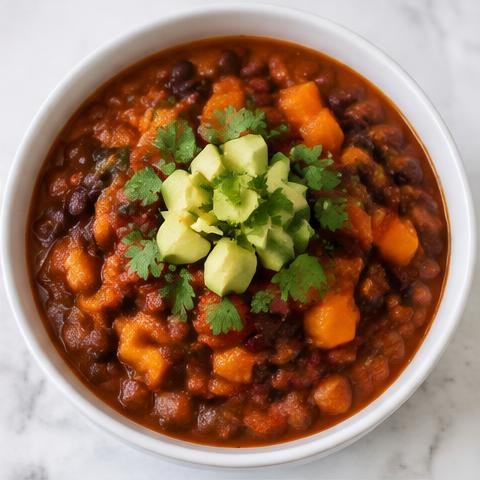
- Prep
- 15 min
- Cook
- 35 min
- Prep + cook
- 50 min
- Serves
- 6
Soaking, resting, cooling and chilling may take extra time; see the cooking guide below. Approximately 390 kcal per serving, excluding optional sides and toppings.
Ingredients
Method
- Heat the oil in a large pot and cook the onion and pepper for 5 minutes. Add garlic and spices and stir for 1 minute.
- Add the sweet potato, tomatoes, broth and cocoa. Bring to a simmer.
- Cook for 15 minutes, then add all the beans.
- Simmer another 15 minutes, uncovered, until the sweet potato is soft and the chili is thick.
- Season with salt and a squeeze of lime. Serve topped with coriander and avocado.
Cook's notes
- Mash a ladle of beans against the side of the pot to thicken the chili naturally.
Why this recipe works
This Smoky Three-Bean Vegan Chili is engineered for maximum flavor development using a layered approach to aromatics, heat-stable spices, and texture-enhancing techniques. By combining three distinct bean varieties, the recipe provides a diverse mouthfeel and complex protein profile that contrasts perfectly with the natural sweetness of cubed sweet potatoes. The smoky notes are derived from high-quality smoked paprika, which serves as the anchor for the dish, while the addition of cocoa powder acts as a flavor bridge, deepening the earthiness of the beans without making the chili taste like dessert.
The success of this one-pot meal relies on the precise timing of ingredient incorporation to ensure no components become mushy. Sweet potatoes are added early to soften without losing their structural integrity, while the beans are added later to maintain their distinct bite. The liquid ratio is calibrated for a thick, stew-like consistency that clings to the palate, which is further achieved by the gentle mashing of a small portion of the beans near the end of the cooking process. This builds a naturally velvety base without requiring added starches or thickeners.
Preparation requires 15 minutes of active knife work and approximately 35 minutes of actual stove time. It is crucial to note that while the chili is ready to serve immediately, the flavor profile benefits significantly from a resting period. Allowing the chili to sit for at least 15 to 20 minutes off the heat allows the vegetable broth and tomato acidity to fully penetrate the starch of the sweet potatoes and the exterior of the beans. This cooling window is essential for achieving the best depth and cohesion of the smoky spices.
Ingredient choices and preparation
The ingredient selection focuses on contrasting textures and a robust flavor base. Black, kidney, and pinto beans are chosen because they each offer different firmness levels; kidney beans remain quite hearty, while pinto beans tend to break down slightly, contributing to the chili's body. These must be thoroughly drained and rinsed to remove the canning brine, which can contain excess sodium and a metallic flavor that detracts from the purity of the chili broth. Using canned beans is a convenience-based strategy that saves significant time compared to dried versions.
Sweet potato preparation is vital for consistency. Dice the potato into uniform 1-centimeter cubes; if the cubes are too large, they will remain raw at the center by the time the beans are ready, but if they are too small, they will disintegrate and cloud the sauce. The onion and red pepper should be diced to a similar size to ensure an even cook and consistent bite. The aromatics, specifically the garlic and spices, are bloomed in olive oil to release fat-soluble volatile compounds, which are essential for a deep, smoky aromatic experience.
The choice of liquid and seasoning is deliberate. Vegetable broth provides the primary savory backbone, while chopped tomatoes introduce the necessary acidity to balance the sweetness of the potato. The cocoa powder is a secret ingredient that enhances the intensity of the chili powder and smoked paprika. Ensure the chili powder you select is a blend (typically containing oregano, cumin, and garlic powder) rather than just ground chili peppers, as the blend provides the quintessential Tex-Mex flavor profile required for this specific recipe.
Equipment and kitchen setup
The primary piece of equipment required is a large, heavy-bottomed pot or Dutch oven, ideally with a capacity of at least 5 to 6 liters. A heavy bottom is essential for heat distribution, preventing the sweet potatoes or beans from scorching on the base of the pot during the final simmering stages where the liquid reduces and thickens. A tight-fitting lid is useful for the initial simmering phase to retain moisture, though the final stage must be done uncovered to achieve the desired density.
For efficient preparation, keep a sharp chef's knife and a sturdy cutting board ready. A garlic press or a microplane can be used to mince the garlic, but a knife provides a cleaner flavor by avoiding the bitterness that sometimes occurs when garlic is crushed too aggressively. A long-handled wooden spoon or a heat-resistant silicone spatula is recommended for folding the ingredients together. The spatula is particularly useful during the mashing step, as it can easily reach into the curved edge of the pot to crush the beans against the side.
Measurement accuracy is key for spices and liquids. Use standard measuring spoons for the chili powder, cumin, paprika, and cocoa powder. For the broth, use a liquid measuring cup to ensure you do not exceed 375 ml, as too much liquid will prevent the chili from reaching its characteristic thick, spoonable consistency. Keep your workspace clear of potential allergen contaminants if you are cooking for guests with sensitivities, as the ingredients are naturally vegan but may be processed in facilities with nuts, soy, or gluten.
Cooking technique in detail
The technique begins with sweating the onion and pepper in olive oil over medium heat. You are looking for a translucent appearance in the onion and a slight softening in the peppers, which should take roughly five minutes. Once these are ready, the spices are added to the hot oil. This 'blooming' process is critical; keep the spices moving with your spoon for 60 seconds. You will notice a significant aroma shift as the smoked paprika and cumin heat up; this prevents raw spice flavor and coats the vegetables in a fragrant, spicy film.
After blooming the spices, the sweet potatoes and wet ingredients are added. The pot should reach a gentle simmer; avoid a rolling, aggressive boil, which can break down the sweet potatoes too quickly. The first 15 minutes of simmering allow the potatoes to absorb the tomato-based liquid. Once the potatoes are partially tender, add the three types of beans. The bean liquid, if not thoroughly rinsed, can make the chili too salty, so ensure they are properly drained beforehand to maintain control over the final seasoning profile.
The final 15-minute simmer is performed uncovered. During this time, the sauce reduces and concentrates. Use your spoon to press roughly half a cup of beans against the side of the pot and stir them back in. This releases starch into the broth, thickening the chili without flour. The final consistency should be dense, where a spoon stood upright in the pot stays mostly stationary. Finish with the lime juice, which cuts through the richness and brightens the heavy, smoky flavors just before service.
What to look for
Blooming spices
The spices should darken slightly and release an intense, fragrant aroma into the oil, but not turn black or acrid.
Sweet potato tenderness
A paring knife should slide through a cube of sweet potato with very little resistance before the beans are added.
Bean mashing
The mixture should appear noticeably thicker after the mashed beans are stirred back into the pot, showing a creamier consistency.
Final consistency
The chili should be thick enough to hold its shape on a spoon, with very little loose liquid left at the bottom of the pot.
Serving ideas and variations
This chili is inherently bold, so serve it in wide, shallow bowls to maximize the surface area for toppings. A generous squeeze of fresh lime juice immediately before serving is non-negotiable, as it provides the essential acid spike to cut through the earthy sweetness of the potatoes and the dense starch of the beans. Fresh coriander should be added as a garnish to provide a cool, herbaceous contrast to the smokiness of the chili powder and paprika.
Avocado is an ideal topping because its creamy, fatty texture complements the lean bean base. For a variation, you could add pickled red onions or sliced radishes for crunch and color. If you are looking for more protein, consider serving the chili over a bed of quinoa or alongside a slice of crusty, toasted sourdough bread, though be mindful that if the bread contains gluten, it will alter the allergy profile of the meal. The chili itself is naturally gluten-free if the broth is certified.
Variations can easily change the profile. For a hotter chili, add finely diced fresh jalapeño or serrano peppers alongside the onions. For a lighter texture, incorporate a handful of baby spinach during the final two minutes of cooking, allowing it to wilt into the hot chili. This adds a nutritional boost without changing the structural integrity of the beans. Always serve with extra lime wedges on the side, as individual preferences for acidity vary greatly among diners.
Make ahead, storage and reheating
Divide the chili into shallow containers and refrigerate promptly at 4 °C or colder, within two hours of cooking or within one hour above 32 °C room temperature. It does not need to reach room temperature first. Use refrigerated chili within three to four days. For longer storage freeze in portions; the beans retain useful texture, although the sweet potato can soften after thawing.
To freeze, portion the chili into individual freezer-safe containers, leaving a half-inch of space at the top to account for expansion. It will remain high quality for up to 3 months. When you are ready to serve, thaw the chili in the refrigerator overnight. Reheating is best done slowly on the stovetop over low heat. Add a tablespoon or two of water or additional vegetable broth if the chili has thickened too much during the freezing process, which is common due to starch absorption.
When reheating, always ensure the internal temperature reaches at least 74 C to guarantee safety. Avoid reheating the entire batch multiple times; instead, only heat the portions you intend to serve. If you have garnished the chili with avocado or coriander, do not reheat these items. Always add fresh toppings after the chili has been reheated. If you notice any separation of the broth, simply stir well; the mashed beans will act as a natural emulsifier to bring the consistency back together.
Nutrition and allergen notes
Each serving provides a hearty balance of complex carbohydrates from the beans and sweet potatoes, as well as significant dietary fiber. The recipe is naturally vegan and dairy-free. Regarding allergens, this recipe contains no common allergens like wheat, nuts, or soy, provided that your specific brand of vegetable broth is checked for ingredients like soy sauce or hydrolyzed vegetable protein. Always verify labels if you are cooking for individuals with strict gluten or soy allergies.
The listed 390 calories per serving is an unverified approximate figure and excludes optional toppings. Beans provide plant-based protein and fibre; sweet potato contributes beta-carotene, which the body can convert to vitamin A. Some fat can aid carotenoid absorption but does not guarantee a particular amount is absorbed. Avocado, oil and portion size change the calorie total. Check actual package labels if tracking nutrition closely.
If you are concerned about sodium, ensure your canned beans are the 'no-salt-added' variety and monitor your vegetable broth levels. Since the recipe does not add extra table salt during cooking, you can easily control the sodium intake at the table. For those with specific sensitivities, please note that some processed spice blends may contain anti-caking agents that could contain traces of allergens, so check your specific chili powder ingredients list if you are cooking for a highly sensitive individual.
Ingredient substitutions
- Sweet potato → Butternut squash
- Use the same volume of cubed squash, but note that it cooks faster, so add it 5 minutes later than the potato.
- Vegetable broth → Water with a splash of soy sauce
- Add 1 tbsp of soy sauce to the water to compensate for the savory depth lost by excluding the stock.
- Black beans → Chickpeas
- Use the same volume, though be aware chickpeas will stay firmer and provide a different texture than the softer black beans.
- Olive oil → Avocado oil
- Use a 1:1 ratio; avocado oil has a higher smoke point and a neutral flavor, which works well with the smoky profile.
Troubleshooting
Chili is too watery
Excessive liquid or insufficient reduction time.
Continue to simmer uncovered for an additional 5-10 minutes and mash more beans to release extra starch.
Spices taste burnt
Heat was too high during the spice blooming stage.
Add a splash of broth immediately to cool the pan, but if the taste is extremely bitter, the batch may be ruined.
Sweet potatoes are mushy
Added too early or simmered at too high a temperature.
In future, cut cubes slightly larger or add them slightly later in the process once the tomatoes are already hot.
Chili lacks depth
Insufficient blooming of spices or lack of acidity.
Ensure the cocoa powder is included and add an extra half-squeeze of lime juice to lift the flavor profile.
Recipe questions
Can I use dried beans instead of canned?
Yes, but they must be soaked and cooked separately first. Dried beans take significantly longer to soften than sweet potatoes. For this one-pot recipe, canned beans provide the correct timing. If you use dried beans, cook them until fully tender before adding them to the pot during the bean-addition step of this recipe, otherwise, they will remain chalky while the potatoes turn to mush.
Does this chili get spicier as it sits?
Yes, it can. The capsaicin and the flavors from the chili powder and smoked paprika tend to infuse more deeply into the beans and potatoes over time. If you are sensitive to heat, you may want to slightly reduce the chili powder by 1/4 teaspoon initially and adjust to taste before serving. Resting the chili for a day allows the flavors to mellow and integrate into a cohesive whole.
Why is the cocoa powder included?
Cocoa powder provides a deep, bitter complexity that mimics the earthiness of traditional slow-cooked chili. It does not make the dish taste like chocolate. It acts as a bridge between the savory tomatoes and the smoky spices, rounding out the profile and creating a richer, darker sauce. Use unsweetened, natural cocoa powder for the best results; avoid dutch-processed or sweetened cocoa mixes at all costs.
How do I handle the lime juice properly?
The lime juice should be added only at the very end of the cooking process, off the heat. Adding it while the chili is boiling can cause the bright, citrusy notes to evaporate or turn slightly bitter. By adding it right before serving, you ensure the acidity remains sharp and effective at cutting through the heavy, smoky flavors. Always squeeze the lime fresh; bottled juice lacks the necessary aromatic oils.
Is this recipe suitable for meal prep?
It is excellent for meal prep. The flavors improve as the chili sits in the refrigerator, making it better on day three than on day one. Store in individual airtight containers. Because it contains potatoes and beans, which are prone to absorbing liquid, the chili may become very thick in the fridge. Simply stir in a tablespoon of water or broth before reheating to return it to the desired consistency.
Replace the job, not just the ingredient
An egg can bind a burger, enrich a cake or create the foam in a meringue. Those jobs need different substitutes: ground flaxseed can help with binding, while aquafaba is useful for whipping.
Review the rewritten method as well as the ingredient list. Changing the amount of liquid, the cooking temperature or the resting time can matter as much as the substitute itself.
- A practical example
- For a creamy pasta, try unsweetened plant cream or blended silken tofu; add acidity and seasoning to taste rather than relying on a cheese substitute alone.
- What to keep in mind
- Substitutions can change allergens, texture and nutrition. Test a small batch before making a dish for guests.
Plan around the week you actually have
Begin with your busiest evenings and choose quick meals for those days. Use slower recipes when you have time, and let overlapping ingredients connect meals rather than planning seven unrelated shopping trips.
Check your pantry before shopping. Choose a protein source, a grain or other starchy food, and vegetables for each main meal; then adjust portions and leftovers for the people eating.
- A practical example
- Roast vegetables for dinner, use the remaining vegetables in a chickpea bowl, and turn spare rice into a quick tofu stir-fry.
- What to keep in mind
- A plan is a starting point, not a prescription. Check food-storage advice and adjust it for allergies, appetite and dietary needs.
Read the pattern, not just one number
Portion size, brand and preparation method change the numbers in a food log. Check whether an entry describes cooked or dry food, and choose the closest match to what you actually ate.
Look across several days rather than judging one meal. Protein and fibre matter, but so do reliable sources of vitamin B12 and attention to calcium, iodine and vitamin D in a plant-based diet.
- A practical example
- For a lentil bowl, log the cooked lentils, grain, dressing and toppings separately when their amounts are known.
- What to keep in mind
- Food logs are estimates and may not capture every nutrient. Supplement needs and targets should be discussed with a qualified professional when appropriate.