
English · 8 min read
7 Mistakes to Avoid When Teaching Sustainability in Schools (2026)
Sustainability teaching mistakes can hinder effective learning. Discover common pitfalls in school climate education. Learn how to empower students effectively.
8/20/2026 · 2,321 words
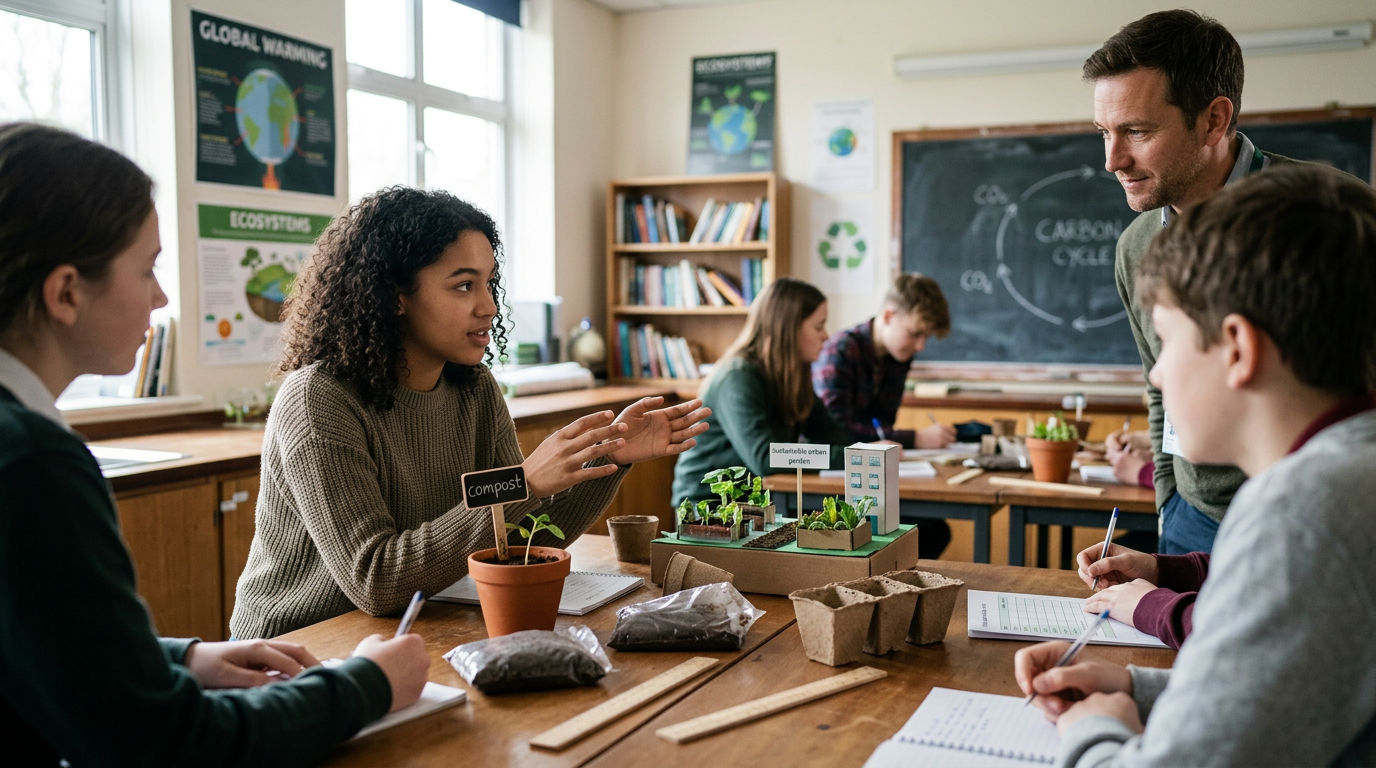
Sustainability education in schools often stumbles by focusing too heavily on doom-and-gloom scenarios without empowering action, thereby fostering eco-anxiety rather than practical solutions.
📚 TL;DR
- Italy's mandatory climate class, introduced in 2020 for all public schools, highlights a global shift towards formal sustainability education (Italian Ministry of Education, 2020).
- UNESCO's "Education for Sustainable Development: Towards 2030" (ESD for 2030) framework aims to integrate sustainability across curricula in over 150 countries by 2030 (UNESCO, 2019).
- Studies show that over 70% of educators feel unprepared to teach complex sustainability topics, underscoring a critical need for teacher training (European Commission, 2023).
- A key mistake is failing to link global sustainability challenges to local, tangible actions, which can disengage students and limit perceived impact.
- Effective sustainability teaching prioritises project-based learning and interdisciplinary approaches over isolated, theoretical lessons, fostering critical thinking and problem-solving skills.
❌ Mistake 1 — Overwhelming students with climate catastrophe without offering solutions
One of the most detrimental mistakes when teaching sustainability in schools is to inundate students with dire predictions of ecological collapse without concurrently providing actionable pathways and hopeful narratives. This "doom-and-gloom" approach, while sometimes intended to convey urgency, often backfires by inducing eco-anxiety and feelings of helplessness among young learners, stifling engagement and proactive behaviour. Research by the American Psychological Association (APA) and eco-psychologist Susan Clayton (2021) indicates that chronic exposure to negative climate information without corresponding empowerment strategies leads to heightened stress and disengagement, particularly among adolescents.
Why it hurts: A constant barrage of negative information without a clear path forward can paralyse students, leading to apathy or severe anxiety. It divorces them from the agency they possess to contribute positively, making them feel like passive victims rather than active agents of change. This approach neglects the psychological well-being of students and fails to cultivate the optimism and resilience necessary for long-term commitment to sustainability.
Do this instead: Frame challenges with a focus on solutions, innovations, and positive impact stories, ensuring every problem presented is paired with potential remedies or ongoing efforts. Emphasise human ingenuity and the power of collective action, providing examples of successful community initiatives, technological advancements, and policy shifts.
"To teach sustainability effectively, we must move beyond merely informing students about problems and instead inspire them to become architects of solutions."
🧑🏫 Mistake 2 — Treating sustainability as a standalone subject rather than an integrated concept
Another common and significant error in sustainability education is to pigeonhole it as an isolated subject, often relegated to a single science lesson or a dedicated "green week" once a year. This fragmented approach fails to convey the pervasive and interconnected nature of sustainability challenges, leading students to view environmental issues as separate from their daily lives and other academic disciplines. UNESCO's Education for Sustainable Development: Towards 2030 (ESD for 2030) framework explicitly calls for the integration of sustainability across all curricula, recognising its relevance to subjects from mathematics to literature (UNESCO, 2019).
Why it hurts: By isolating sustainability, schools miss crucial opportunities to demonstrate its real-world applicability and systemic importance. Students struggle to connect abstract environmental concepts to economics, social justice, history, or even art, preventing a holistic understanding of sustainable development. This can result in superficial learning and a failure to embed sustainable thinking into their broader worldview or future career paths.
Do this instead: Adopt an interdisciplinary approach, weaving sustainability themes into existing subjects. For example, analyse supply chains in economics, discuss renewable energy in physics, explore climate fiction in literature, or study historical environmental movements in history.
🌍 Mistake 3 — Neglecting local context and making it too abstract
A frequent oversight is teaching sustainability in a way that is overly theoretical or focused on distant, large-scale problems without anchoring it in the students' immediate environment and community. When lessons predominantly cover global deforestation or Arctic ice melt without addressing local issues like waste management, urban greening, or sustainable food systems, students struggle to see the direct relevance or their personal capacity to contribute. This creates a disconnect between abstract knowledge and practical action, diminishing motivation.
Why it hurts: Without local relevance, sustainability can feel like an insurmountable, abstract problem belonging to scientists or politicians, not something actionable by an individual. This detachment can lead to disengagement, as students fail to perceive how their choices and actions can impact their own communities or contribute to global solutions. It also overlooks the rich learning opportunities present in their local ecosystems and social structures.
Do this instead: Prioritise local case studies, community projects, and direct engagement with local environmental challenges. Invite local experts, facilitate field trips to recycling centres or urban farms, and encourage students to identify and solve sustainability issues within their school or neighbourhood.
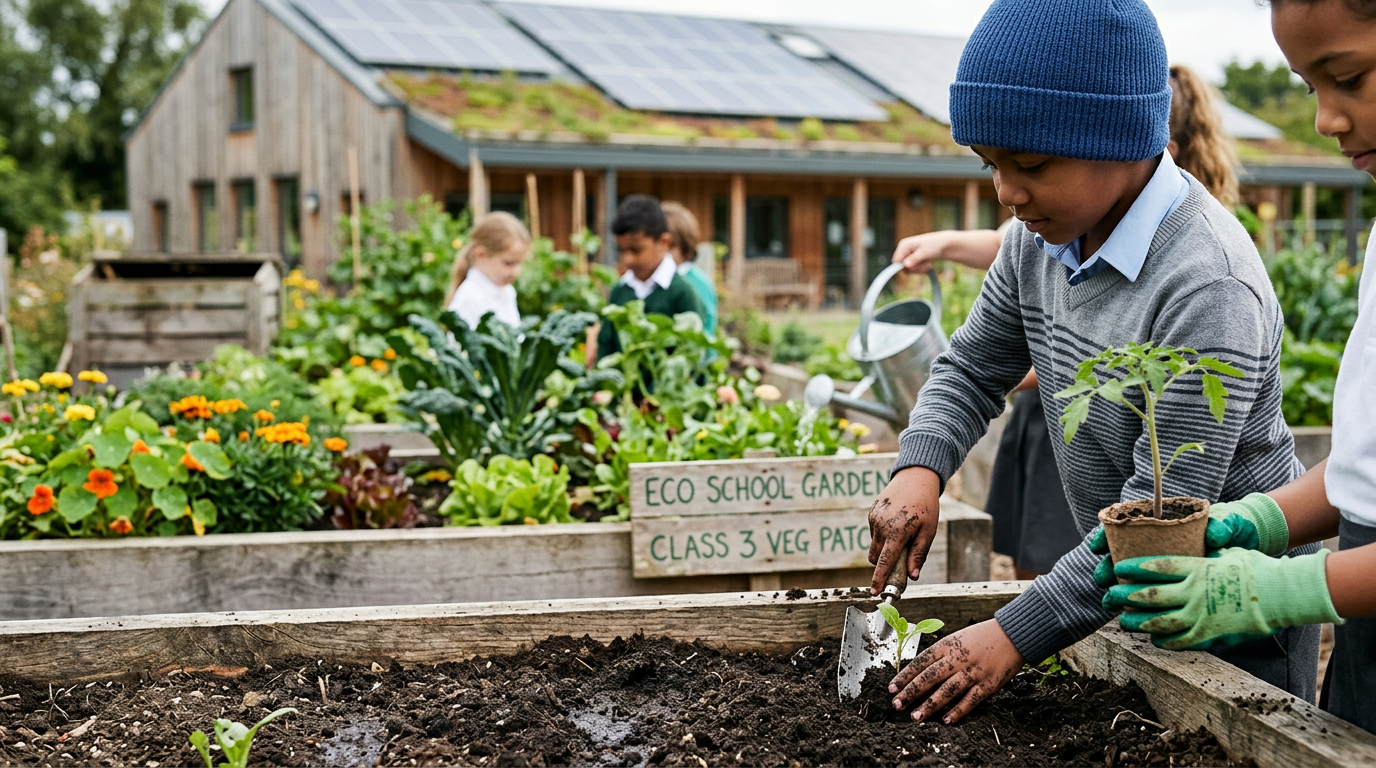
- Community Gardens: Students could plant and maintain a school garden, learning about sustainable agriculture and food sovereignty.
- Waste Audits: Conduct a school-wide waste audit, identifying key areas for reduction, reuse, and recycling.
- Local Policy: Research and discuss local environmental policies, engaging with municipal councils or environmental groups.
🗣️ Mistake 4 — Over-relying on didactic lectures instead of experiential learning
A significant barrier to effective sustainability education in schools is the continued reliance on traditional lecture-based teaching methods for a topic that demands hands-on engagement and critical thinking. Simply presenting facts and figures about climate change or resource depletion, while necessary for foundational knowledge, often falls short in developing the practical skills and emotional intelligence required for sustainable living. Experiential learning, by contrast, immerses students in real-world scenarios, fostering deeper understanding and personal connection (Kolb, 1984).
Why it hurts: Didactic instruction can make sustainability feel academic and detached, failing to stimulate the curiosity, empathy, and problem-solving skills essential for addressing complex challenges. Students may memorise information for tests but lack the ability to apply it, innovate, or collaborate effectively on sustainability projects. This passive learning environment does not cultivate the active citizens needed for a sustainable future.
Do this instead: Integrate project-based learning, simulations, debates, and outdoor education into the curriculum. Encourage students to design solutions, conduct experiments, participate in citizen science projects, or engage in role-playing scenarios that explore various stakeholders' perspectives on environmental issues.
⚖️ Mistake 5 — Ignoring the social and ethical dimensions of sustainability
Many educational programmes err by narrowly defining sustainability as purely an environmental issue, overlooking its crucial social, economic, and ethical dimensions. A truly holistic understanding of sustainable development, as articulated by the United Nations Sustainable Development Goals (UN SDGs), encompasses poverty eradication, social equity, human rights, and economic viability alongside environmental protection (UN, 2015). Italy's mandatory climate class, for example, seeks to integrate these broader dimensions, linking environmental impact to social justice (Italian Ministry of Education, 2020).
Why it hurts: An environmental-only focus creates a fragmented view of the world, failing to show how issues like climate change disproportionately affect vulnerable communities, or how economic policies can either hinder or accelerate sustainable transitions. It neglects the critical interdependencies between people, planet, and prosperity, leading to incomplete solutions that may exacerbate social inequalities even while addressing environmental concerns. This limited perspective can also alienate students from diverse backgrounds who might not immediately connect with purely ecological narratives.
Do this instead: Explicitly integrate social justice, ethics, and economic perspectives into sustainability discussions. Explore topics such as climate equity, responsible consumption and production (SDG 12), fair trade, circular economy principles, and the historical roots of environmental injustices.
"Sustainability is not just about saving the planet; it's about building a just and equitable future for all its inhabitants."
📉 Mistake 6 — Failing to equip teachers with adequate training and resources
A critical yet frequently overlooked mistake in implementing sustainability education is the failure to adequately train and resource educators themselves. Teachers, while often passionate, may not have been trained in sustainability concepts during their own education and can feel unprepared to tackle complex, evolving topics like climate science, circular economy models, or eco-psychology. Without proper professional development, up-to-date curricula, and supportive teaching materials, even the most well-intentioned initiatives are destined to underperform. The European Commission (2023) highlights a significant gap in teacher preparedness across EU member states regarding sustainability education.
Why it hurts: An unprepared teaching staff can lead to superficial coverage of sustainability topics, reliance on outdated information, or complete avoidance of the subject due to lack of confidence. This directly impacts the quality of student learning, as educators may struggle to answer complex questions, facilitate engaging discussions, or design impactful projects. It also places an undue burden on teachers, potentially leading to burnout and decreased morale.
Do this instead: Invest significantly in ongoing professional development programmes for teachers, covering both the scientific understanding of sustainability and pedagogical approaches for teaching it. Provide access to high-quality, regionally relevant teaching resources, guest speakers, and opportunities for peer collaboration.
🚫 Mistake 7 — Neglecting to model sustainable practices within the school itself
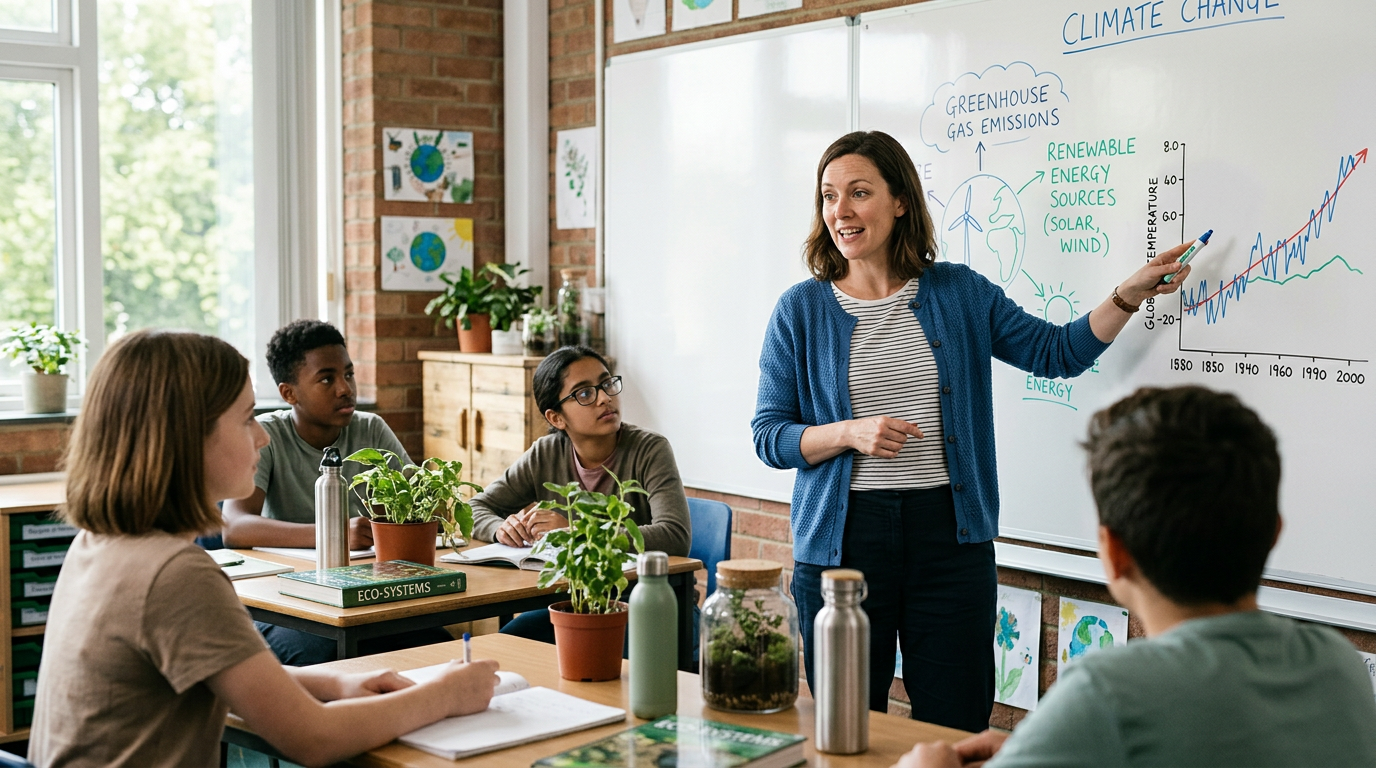
One of the most profound errors in teaching sustainability is when the school environment itself does not reflect the principles it advocates in the classroom. If students are taught about waste reduction but see overflowing bins and excessive energy consumption within their own institution, the lessons become hypocritical and lose credibility. The school building, its operations, procurement, and culture serve as a living laboratory for sustainability, and inconsistencies undermine educational efforts.
Why it hurts: Inconsistent messaging between what is taught and what is practiced creates cognitive dissonance and cynicism among students. It teaches them that sustainability is an ideal to be discussed, not a practice to be lived, ultimately weakening the call to action. Students learn best through observation and participation, and a school that fails to embody sustainable principles misses a powerful opportunity for experiential learning and instilling genuine values.
Do this instead: Implement school-wide sustainable practices, making the campus a tangible example of environmental stewardship. This includes energy efficiency upgrades, comprehensive recycling and composting programmes, water conservation, sustainable catering choices, and integrating green spaces. Involve students in these initiatives, giving them agency in improving their school's environmental footprint.
📊 By the numbers
- 15 hours per year — The minimum dedicated time for climate change and sustainability education required by Italy's mandatory curriculum across all public schools since September 2020 (Italian Ministry of Education, 2020).
- 50% reduction — The target for food waste in schools by 2030, a goal supported by many national sustainability education frameworks (FAO, 2023).
- 93% of young people — Express concern about climate change, with 59% reporting feeling "very" or "extremely" worried (Hickman et al., The Lancet Planetary Health, 2021).
- €29 billion — The estimated economic benefits of investing in sustainable school buildings in Europe, including health and performance improvements (World Green Building Council, 2019).
- 17 Sustainable Development Goals — The comprehensive framework from the UN that underpins modern sustainability education, covering social, economic, and environmental dimensions (UN, 2015).
- 25% greater engagement — Students involved in project-based sustainability learning show significantly higher engagement compared to traditional methods (National Academy of Sciences, 2018).
🌍 Regional context
Sustainability education is evolving differently across English-speaking regions, each with its unique policy drivers, agencies, and specific focus areas, illustrating the diverse approaches to integrating environmental and social responsibility into learning.
United Kingdom
In the UK, while there isn't a single mandatory "climate class" like in Italy, the Department for Education (DfE) launched its Sustainability and Climate Change Strategy in 2022, aiming to make the UK a world leader in education for sustainability by 2030. This strategy encourages a whole-setting approach, including curriculum integration, green skills development, and net-zero schools. Agencies like the UK Food Standards Agency (FSA) play a role in promoting sustainable food education, while initiatives like the Eco-Schools programme, run by the environmental charity Keep Britain Tidy, provide a framework for schools to embed sustainability into their daily operations and curriculum, reaching thousands of schools across England, Wales, and Northern Ireland. The Intergovernmental Panel on Climate Change (IPCC) reports are frequently referenced in curriculum materials, alongside data from Our World in Data to provide context on global emissions and consumption patterns.
In England, the DfE’s 2022 Sustainability and Climate Change Strategy aims for an "interdisciplinary approach" to climate education, promoting a comprehensive 'whole-school' effort.
Canada
Canada's approach to sustainability education is largely decentralised, with provincial and territorial governments holding jurisdiction over education. However, many provinces are making significant strides. For instance, Ontario's curriculum includes expectations related to environmental stewardship across various subjects, supported by organisations like Learning for a Sustainable Future (LSF). The Pan-Canadian Framework on Clean Growth and Climate Change (Government of Canada, 2016) indirectly influences educational policy by setting national climate goals, which provinces then translate into educational priorities. The Canadian Food Inspection Agency (CFIA) also contributes to food system sustainability discussions, which often find their way into school lessons on healthy eating and sustainable agriculture. Many schools collaborate with local Indigenous communities to incorporate traditional ecological knowledge into their sustainability teachings, recognising the deep historical and cultural connections to land stewardship.
Australia
In Australia, the national curriculum includes "Sustainability" as one of three cross-curriculum priorities, meaning it's expected to be integrated across all learning areas from Foundation to Year 12. This prioritisation ensures that students develop the knowledge, skills, and values necessary for a sustainable future. Organisations like the Australian Curriculum, Assessment and Reporting Authority (ACARA) provide resources and guidance for teachers. The Commonwealth Scientific and Industrial Research Organisation (CSIRO) is a prominent source of scientific data and research, often forming the basis for educational content on climate science, biodiversity, and resource management. There's a strong emphasis on practical outdoor education, linking students directly to Australia's unique ecosystems and indigenous land management practices.
Australia's national curriculum embeds "Sustainability" as a cross-curriculum priority, ensuring it is woven into all subjects, not just taught in isolation.
Editor's note: this article is informational, not medical advice.