Vegan · breakfast
Fluffy Vegan Tofu Scramble
A protein-rich, egg-free breakfast scramble with turmeric, black salt and spinach. Ready in 15 minutes.
Jump to recipe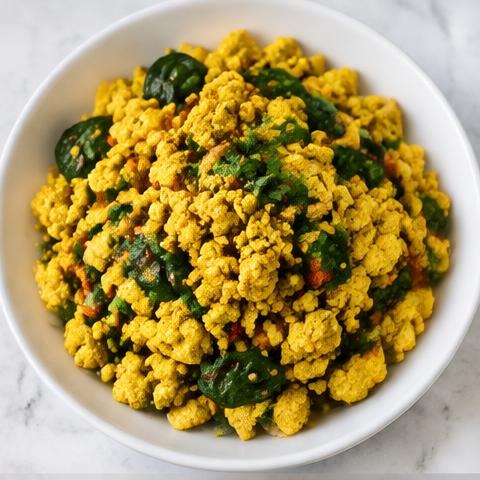
- Prep
- 5 min
- Cook
- 10 min
- Prep + cook
- 15 min
- Serves
- 2
Soaking, resting, cooling and chilling may take extra time; see the cooking guide below. Approximately 260 kcal per serving, excluding optional sides and toppings.
Ingredients
Method
- Heat the oil in a pan and cook the onion for 3 minutes until soft.
- Crumble the tofu into the pan with your hands into small and large pieces.
- Add turmeric and nutritional yeast and cook 4 minutes, stirring, until lightly golden.
- Stir in the plant milk to make it creamy, then the spinach until just wilted.
- Take off the heat, season with kala namak and pepper, and serve on toast.
Cook's notes
- Add kala namak at the end — heat dulls its eggy flavour.
Why this recipe works
Firm tofu produces distinct, resilient curds when crumbled. Silken tofu can also make a softer scramble, but is more delicate and breaks apart easily; it does not inherently dissolve into liquid. The turmeric gives colour, nutritional yeast adds savoury flavour and plant milk helps the curds stay moist. This is a tofu dish with an egg-free breakfast character, not an exact reproduction of egg composition or nutrition.
The inclusion of plant milk is a critical element that changes the density of the tofu mixture, transforming dry, crumbly curds into a moist, luxurious scramble that coats the palate effectively. By incorporating spinach, we introduce a vibrant green contrast and essential fiber, while also utilizing the residual steam to gently wilt the leaves without overcooking them. The rapid ten-minute cook time is optimized to prevent the tofu from dehydrating, ensuring that the final dish remains juicy rather than parched, which is a common failure in high-heat vegan egg alternatives.
Kala namak serves as the secret weapon in this dish, providing a sulfurous, pungent aroma that is chemically identical to the smell of cooked eggs. Because this aroma is volatile and susceptible to high heat, the timing of its addition is strictly controlled. By seasoning at the very end, the distinct eggy profile remains potent rather than evaporating during the saute process. This methodical assembly produces a complex breakfast that relies on aroma, color, and texture to simulate the experience of a traditional scramble.
Ingredient choices and preparation
The core of this recipe is 400g of firm tofu, which must be drained of excess packing water to allow for proper browning. When selecting tofu, avoid extra-firm varieties if you prefer a softer, creamier result, or opt for standard firm to achieve the best balance between structural integrity and moisture absorption. Crumbling by hand is superior to grating because it creates varied sizes, mimicking the irregular curds of scrambled eggs, which adds dynamic mouthfeel during every bite. Be sure to press the tofu block gently in a clean kitchen towel for a few minutes before crumbling to maximize the surface area for seasonings.
Nutritional yeast provides the essential cheesy, nutty profile that rounds out the otherwise neutral tofu flavor. Use a high-quality, fortified nutritional yeast for the best depth. The turmeric is primarily functional for color, turning the tofu into a classic golden yellow, but it also adds a subtle, earthy undertone. Choose a mild plant milk, such as soy or unsweetened almond, as sweetened or flavored varieties will negatively impact the savory profile of the dish. The onion must be finely diced to ensure it softens quickly without needing to be sauteed until caramelized, keeping the flavor profile light and fresh.
Kala namak, also known as Himalayan black salt, is an essential mineral salt that contains iron sulfide, providing the signature eggy taste. It is distinct from standard table salt and cannot be replaced if you are seeking that specific flavor profile. If you cannot source black salt, use kosher or sea salt, but understand that the dish will lack its trademark aroma. Fresh spinach adds texture and volume, and it should be added at the very end of the cooking process to preserve its vibrant green color and prevent it from turning into a muddy, overcooked mess.
Equipment and kitchen setup
A large non-stick skillet or a well-seasoned cast-iron pan is essential for this recipe. Because tofu is protein-rich and prone to sticking, a non-stick surface allows you to achieve a light golden sear on the tofu crumbles without losing large portions of the mixture to the bottom of the pan. A standard ten-inch skillet is ideal as it provides enough space for the tofu to spread out, which facilitates even cooking and prevents the tofu from steaming in its own liquid, ensuring the desired texture is maintained throughout the cooking process.
You will need a sturdy silicone spatula for folding and stirring the scramble. Silicone is preferred over metal because it allows you to scrape the bottom of the pan thoroughly, ensuring the nutritional yeast and turmeric are evenly distributed without damaging the pan’s coating. Since the cook time is very short, having all your ingredients measured and chopped (mise en place) is vital. Have your spices pre-mixed in a small ramekin or cup to allow for a quick, one-step seasoning process once the tofu is at the appropriate temperature.
Temperature control is paramount, so a reliable stove that can maintain a medium-high flame is necessary. Avoid high heat, which can cause the turmeric to become bitter and the tofu to become rubbery. If you have an electric stove, adjust your heat settings slightly early to ensure the pan does not stay too hot after the initial onion saute. Ensure your workspace is clutter-free so you can move efficiently between the stove and your serving area, as this dish is best served immediately upon completion while the spinach is still bright and the tofu is steaming hot.
Cooking technique in detail
Begin by heating the olive oil over medium heat until it shimmers. Sauté the finely diced onion until it is translucent and soft, which should take roughly three minutes. This step is crucial for mellowing the sharp onion flavor. Once soft, add the crumbled tofu directly to the pan. If the tofu is too wet, the scramble will be watery; ensure it is properly drained before crumbling. Use the spatula to distribute the tofu evenly across the pan surface to maximize contact with the heat, allowing for the initial moisture to evaporate, which creates a firmer, more authentic egg-like texture.
Introduce the turmeric and nutritional yeast, tossing the mixture thoroughly. The heat during this phase allows the turmeric to bloom, releasing its earthy aroma and coating every piece of tofu in a vibrant yellow. Stir frequently for four minutes; you are looking for the tofu to turn lightly golden and develop a slight crust. If the mixture appears too dry during this phase, do not add the milk yet, as you want the tofu to toast slightly to develop a complex savory flavor before adding the liquid component that creates the creamy, soft scramble consistency.
Add the plant milk to create the final, luxurious texture. As the liquid hits the hot pan, it will hydrate the nutritional yeast and bind the spices to the tofu. Immediately fold in the fresh spinach. The residual heat from the tofu will wilt the spinach in under sixty seconds, keeping it vibrant. Remove the pan from the heat source before adding the kala namak. By stirring the black salt in off-heat, you preserve the sulfurous compounds that mimic egg flavor, ensuring they are not lost to the steam or intense heat of the stovetop.
What to look for
Onion Sauté
Onions are translucent and soft, indicating they have lost their raw bite.
Tofu Toasting
Tofu crumbles look lightly golden and have reduced in moisture, holding a firm shape.
Binding
The mixture appears creamy and cohesive after adding the plant milk and stirring.
Final Seasoning
Spinach has just wilted, and the heat is off before adding the black salt.
Serving ideas and variations
Serve the scramble immediately while it is at its peak temperature and texture. The ideal pairing is toasted sourdough or whole-grain bread, which provides a satisfying crunch that contrasts with the softness of the scramble. For a more substantial meal, consider serving it alongside roasted breakfast potatoes, sliced avocado, or even a simple side salad of arugula dressed with lemon juice to cut through the richness of the nutritional yeast. The acidity of the lemon acts as a perfect counterpoint to the savory, umami-heavy flavor profile of the seasoned tofu.
For variations, you can incorporate additional vegetables earlier in the cooking process. Sautéed bell peppers, mushrooms, or cherry tomatoes work exceptionally well if added alongside the onions. If you prefer a heartier dish, stir in some cooked black beans or vegan sausage crumbles during the final minute of cooking. You can also experiment with heat by adding a pinch of chili flakes or a dash of hot sauce, such as sriracha or cholula, which complements the eggy profile of the black salt beautifully.
For a fancy brunch presentation, sprinkle the scramble with fresh chives or chopped cilantro right before serving. These fresh herbs add a brightness that elevates the dish from a humble scramble to a sophisticated meal. If you are serving this for a crowd, you can easily double or triple the recipe, provided you use a sufficiently large pan. Do not overcrowd the skillet, as this will lead to uneven cooking; if necessary, cook the scramble in batches to maintain the integrity of the tofu texture and the vibrancy of the greens.
Make ahead, storage and reheating
Transfer leftovers to shallow containers and refrigerate promptly at 4 °C or colder within two hours of cooking; do not wait for room-temperature cooling. Use within three days and reheat to 74 °C throughout. Spinach may release moisture during storage, so stir the reheated scramble before deciding whether extra milk is necessary. Keep toast separately and add it fresh so it does not absorb liquid from the tofu.
When reheating, it is essential to do so carefully to avoid turning the tofu into rubber. The best method is to reheat on the stovetop over medium-low heat with a splash of plant milk to restore the original moisture content. Stir frequently to ensure even heating. Reheat to an internal temperature of 74 degrees Celsius. Avoid high-heat microwave reheating, as this often leads to uneven hot spots and can cause the tofu to dry out significantly, resulting in a rubbery texture that loses the desired fluffy, scrambled egg character.
Freezing is not recommended for this recipe. The high water content in both the tofu and the spinach causes the structure to degrade upon thawing. Once frozen and thawed, the tofu will become spongy and the spinach will lose its texture entirely, resulting in a dish that lacks the appeal of the original. If you must prepare elements in advance, dice the onions and press the tofu the night before to save prep time, but keep the cooking process until the moment you intend to serve the meal.
Nutrition and allergen notes
This scramble is a protein-dense vegan breakfast option. Tofu is a complete plant-based protein containing all nine essential amino acids. The nutritional yeast provides additional B vitamins, including B12, depending on the brand. With approximately 260 calories per serving, this dish provides a balanced start to the day. It is naturally cholesterol-free and significantly lower in saturated fat compared to traditional egg-based scrambles. Please note that this calculation is based on the scramble alone and does not include the calories from toast or additional sides.
Allergen warnings: Tofu is made from soybeans, which are a major allergen. This recipe contains soy. Additionally, while the ingredients listed are generally safe, always check the packaging of your nutritional yeast and plant milk for potential cross-contamination with gluten, nuts, or sesame if you are managing severe allergies. Nutritional yeast is often processed in facilities that handle other allergens, so verify labels if you have specific dietary requirements. Kala namak is a natural mineral product but should be used sparingly as it is sodium-heavy.
Drain tofu to control the scramble’s texture, not to prevent bloating. Digestive tolerance to soy varies, and removing packing water is not an established way to prevent digestive symptoms. Anyone with soy allergy should avoid tofu. Check plant milk and toppings for other allergens, and omit kala namak if its flavour is unwelcome. A vegan recipe is not a guarantee that a dish suits every dietary or medical requirement.
Ingredient substitutions
- Firm tofu → Chickpea flour base
- Mix 1 cup chickpea flour with 1 cup water and whisk until smooth before cooking like an omelet.
- Olive oil → Avocado oil
- Use a 1:1 ratio; avocado oil has a higher smoke point and neutral flavor.
- Nutritional yeast → Miso paste
- Use 1 tablespoon of light miso paste thinned with the plant milk for a similar umami depth.
- Spinach → Kale
- Use finely chopped kale, but sauté for 2 minutes longer than spinach as it is tougher.
Troubleshooting
Tofu is watery and bland.
Tofu was not pressed or drained sufficiently before cooking.
Press tofu in a clean towel for 15 minutes before scrambling.
Scramble lacks eggy flavor.
Black salt was added too early and the flavor evaporated.
Always add black salt only after removing the pan from the heat.
Scramble is rubbery.
Cooking at too high a temperature for too long.
Reduce heat to medium and cook for no more than 10 minutes total.
Turmeric is bitter.
Turmeric was scorched or not fully bloomed in oil.
Add turmeric with the nutritional yeast and ensure oil is not smoking hot.
Recipe questions
Does the tofu need to be pressed before I start?
Yes, pressing the tofu for at least 5 to 10 minutes is highly recommended. By removing the excess water held within the block, you ensure that the tofu can absorb the savory flavors of the turmeric, yeast, and plant milk. If you skip this, the water will steam the tofu rather than browning it, leading to a mushy, diluted scramble that lacks the proper structural integrity and richness.
Can I use silken tofu for this recipe?
Silken tofu is not suitable for this specific recipe. It has a high water content and a delicate texture that will dissolve into a smooth, sauce-like consistency when heated, rather than forming the firm curds required for a scramble. If you prefer a very soft texture, you could use a medium-firm tofu, but firm or extra-firm tofu remains the gold standard for achieving the classic scrambled egg aesthetic and mouthfeel.
What is the best way to get that authentic eggy smell?
The authentic eggy aroma is derived entirely from kala namak, or black salt. This ingredient is high in sulfur, which mimics the natural sulfuric compounds found in eggs. The most important technique is to add the black salt only after you have removed the pan from the heat. Since heat causes the sulfurous smell to evaporate quickly, adding it too early will result in a dish that tastes salty but lacks that distinct egg scent.
Is it possible to make this recipe ahead of time?
While it is possible to store the cooked scramble in the refrigerator for up to three days, the texture will inevitably change as the tofu continues to absorb moisture. The best approach for meal prepping is to do your mise en place—dicing the onions and pressing the tofu—the night before. This allows you to cook the dish in its entirety in under 15 minutes, ensuring the freshest, fluffiest possible results every single time.
How do I know when the tofu is perfectly cooked?
You will know the tofu is perfectly cooked when the pieces appear lightly golden, indicating that the nutritional yeast and turmeric have properly toasted onto the surfaces. The texture should feel firm yet moist, and the plant milk should have created a creamy coating that binds the crumbles together. The spinach should be bright green and barely wilted, showing that it has retained its structure while being warmed through by the residual heat of the scramble.
Replace the job, not just the ingredient
An egg can bind a burger, enrich a cake or create the foam in a meringue. Those jobs need different substitutes: ground flaxseed can help with binding, while aquafaba is useful for whipping.
Review the rewritten method as well as the ingredient list. Changing the amount of liquid, the cooking temperature or the resting time can matter as much as the substitute itself.
- A practical example
- For a creamy pasta, try unsweetened plant cream or blended silken tofu; add acidity and seasoning to taste rather than relying on a cheese substitute alone.
- What to keep in mind
- Substitutions can change allergens, texture and nutrition. Test a small batch before making a dish for guests.
Plan around the week you actually have
Begin with your busiest evenings and choose quick meals for those days. Use slower recipes when you have time, and let overlapping ingredients connect meals rather than planning seven unrelated shopping trips.
Check your pantry before shopping. Choose a protein source, a grain or other starchy food, and vegetables for each main meal; then adjust portions and leftovers for the people eating.
- A practical example
- Roast vegetables for dinner, use the remaining vegetables in a chickpea bowl, and turn spare rice into a quick tofu stir-fry.
- What to keep in mind
- A plan is a starting point, not a prescription. Check food-storage advice and adjust it for allergies, appetite and dietary needs.
Read the pattern, not just one number
Portion size, brand and preparation method change the numbers in a food log. Check whether an entry describes cooked or dry food, and choose the closest match to what you actually ate.
Look across several days rather than judging one meal. Protein and fibre matter, but so do reliable sources of vitamin B12 and attention to calcium, iodine and vitamin D in a plant-based diet.
- A practical example
- For a lentil bowl, log the cooked lentils, grain, dressing and toppings separately when their amounts are known.
- What to keep in mind
- Food logs are estimates and may not capture every nutrient. Supplement needs and targets should be discussed with a qualified professional when appropriate.