
Middle Eastern · lunch
Comforting Red Lentil Soup
A creamy, lemony red lentil soup made from pantry staples. No blender needed, ready in 30 minutes.
Jump to recipe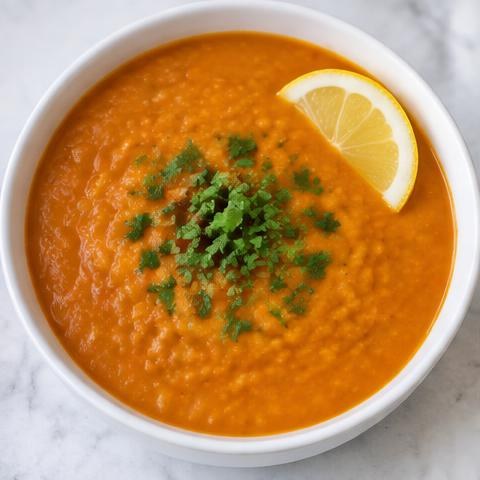
- Prep
- 10 min
- Cook
- 25 min
- Prep + cook
- 35 min
- Serves
- 4
Soaking, resting, cooling and chilling may take extra time; see the cooking guide below. Approximately 300 kcal per serving, excluding optional sides and toppings.
Ingredients
Method
- Heat the oil in a pot and cook the onion and carrot for 5 minutes.
- Add garlic, spices and tomato paste and stir for 1 minute.
- Add the lentils and broth, bring to the boil, then simmer 20 minutes until the lentils fall apart.
- Whisk hard for 30 seconds to make it creamy, season, and finish with lemon and parsley.
Cook's notes
- Red lentils break down on their own, so you get a smooth soup without blending.
Why this recipe works
This red lentil soup succeeds by utilizing the unique structural properties of red lentils, which naturally disintegrate into a creamy puree when simmered. Unlike green or brown lentils that maintain their shape, red lentils have their outer husks removed, allowing moisture to penetrate the starchy interior quickly during cooking. By skipping the blender, you preserve a rustic, pleasing texture while saving significant cleanup time and minimizing the risk of over-processing the soup into an unappealing, gluey consistency.
The flavor profile is built through layered aromatics and blooming spices in hot oil. Starting with diced onion and carrot creates a foundational sweetness that balances the earthy profile of the legumes. The addition of tomato paste provides a concentrated umami depth, while the cumin and smoked paprika offer warmth and subtle smokiness. This combination ensures that even with a short 30-minute cook time, the soup achieves a depth typically associated with much longer simmering projects.
A critical component of this recipe is the use of acid at the final stage. The squeeze of lemon juice acts as a flavor bridge, cutting through the starch of the lentils and lifting the savory notes of the garlic and broth. This brightness is essential to move the palate away from heaviness. Because red lentils absorb liquid rapidly, the 5-cup ratio to 1 cup of lentils provides the ideal density, ensuring a spoonable, hearty consistency that feels substantial without becoming a solid paste as it sits.
Ingredient choices and preparation
Red lentils are the star of this dish; choose split red lentils for the fastest breakdown. Ensure they are thoroughly rinsed in a fine-mesh sieve until the water runs clear to remove excess dust and starch, which can cause unwanted foam during boiling. While you can use whole red lentils, split ones are preferred here to match the 20-minute cook window. If your lentils are aged, they may take slightly longer to dissolve, so check for tenderness before finishing the soup.
The vegetable aromatics—onion, carrot, and garlic—provide the structural base. Dice the onion and carrot into small, uniform cubes (approximately 0.5 cm) to ensure they soften at the same rate as the lentils. Mincing the garlic finely ensures it distributes evenly without leaving large, pungent chunks. Tomato paste should be of high quality; it acts as a thickening agent and flavor intensifier, so ensure you bloom it briefly in the oil to remove the raw, metallic tin flavor.
Vegetable broth quality dictates the final outcome. Use a clear, salt-controlled broth to ensure you can adjust the final seasoning accurately. The olive oil should be standard cooking-grade rather than extra-virgin finishing oil to withstand the initial sauteing heat without breaking down. The fresh parsley and lemon are not merely garnishes but essential finishing ingredients; the parsley adds a peppery, fresh contrast, while the lemon juice provides the necessary acidity to highlight the subtle spice profile.
Equipment and kitchen setup
A heavy-bottomed 3 to 4-quart Dutch oven or a standard soup pot is ideal for this recipe. The heavy bottom promotes even heat distribution, which is crucial when sauteing the onions and carrots to prevent localized scorching. Because the lentils expand significantly, a pot with high sides is recommended to prevent splattering during the initial boil. A tight-fitting lid is also required to maintain a consistent simmer, which helps the lentils break down efficiently while preventing excessive evaporation.
For the final stage, a sturdy wire whisk is your primary tool. Unlike a blender or immersion wand, a whisk allows you to mechanically break down the soft lentils while retaining a bit of character. If you find the whisk insufficient, a wooden spoon or a heavy-duty silicone spatula can be used to manually press any remaining whole lentils against the side of the pot. Ensure you have a sharp chef’s knife for precise dicing and a fine-mesh sieve for cleaning the lentils.
A microplane or small grater is optional if you prefer to grate the garlic rather than mince it, which yields a more integrated texture. Always prepare your workstation by gathering all ingredients before turning on the heat. Because the cooking process moves from the saute phase to the simmering phase in rapid succession, having your broth measured and spices ready in small prep bowls prevents the garlic or spices from burning while you are busy measuring other components.
Cooking technique in detail
The process begins with the 'sweat' technique, which is foundational to depth of flavor. Cook the onions and carrots over medium heat until the onions are translucent and the carrots have softened slightly, usually taking about 5 minutes. This step releases the natural sugars in the vegetables, which will later counteract the earthiness of the lentils. Keep the heat moderate; if the onions begin to brown too quickly, turn the heat down, as scorched onions can impart a bitter note that will taint the entire batch.
Blooming the spices and tomato paste is the second crucial technique. Adding the cumin, smoked paprika, and tomato paste to the aromatics for 60 seconds serves two purposes: it releases fat-soluble aromas from the spices and cooks the tomato paste until it reaches a deep, darkened red. Once the lentils and broth are added, bring the liquid to a rapid boil before immediately reducing to a gentle simmer. A vigorous boil at the start helps initiate the breakdown of the legume cell walls.
After simmering, check that the lentils are fully softened and beginning to break apart. Whisk carefully to distribute their cooked starch and solids through the soup; this thickens the liquid rather than emulsifying starch with broth. Keep the whisk below the surface to avoid hot splashes. Add lemon near the end and taste. If the soup is too thick, add broth gradually before making the final seasoning adjustment.
What to look for
Sauteing Aromatics
Onions appear translucent and the carrots have softened slightly, taking roughly 5 minutes on medium heat.
Blooming Spices
The tomato paste has turned a deep brick red and the kitchen is filled with a fragrant, earthy aroma after 1 minute.
Simmering Lentils
The lentils have lost their distinct shape and have turned into a soft, thickened porridge consistency, usually after 20 minutes.
Emulsification
After 30 seconds of vigorous whisking, the soup achieves a uniform, creamy, and pourable consistency.
Serving ideas and variations
Serve the soup hot in wide, shallow bowls to allow the aroma of the smoked paprika to reach the diner. To provide a textural contrast, top the bowl with toasted pita bread chips, sourdough croutons, or a sprinkle of toasted sunflower seeds. A drizzle of high-quality extra virgin olive oil over the top immediately before serving adds a silky mouthfeel and enhances the herbaceous notes of the fresh parsley garnish.
For a more substantial meal, serve this soup alongside a light salad of crisp cucumber, radish, and arugula with a lemon-tahini dressing. This adds a refreshing crunch that complements the velvety consistency of the soup. You can also pair it with a side of warm flatbread like naan or pita to scoop up the broth, making it an excellent lunch or light dinner option that feels satisfying and complete without heavy saturated fats.
Variations can include adding leafy greens like baby spinach or chopped kale during the final 2 minutes of simmering; the residual heat will wilt the greens perfectly. For those who enjoy extra spice, a pinch of chili flakes or cayenne pepper added with the cumin will introduce a welcome heat. For a more Mediterranean finish, consider garnishing with a spoonful of plain vegan yogurt or a sprinkle of dried mint, which pairs exceptionally well with the lemon-lentil flavor combination.
Make ahead, storage and reheating
This soup is an excellent candidate for meal prep as the flavors continue to meld and harmonize in the refrigerator overnight. Once the soup is cooked, allow it to cool at room temperature for no more than 60 minutes before transferring it to airtight glass or food-grade plastic containers. Do not leave the soup out for longer than 2 hours to ensure food safety. Store in the refrigerator for up to 4 days; keep in mind that the lentils will continue to absorb liquid, resulting in a much thicker soup.
When reheating, you will likely need to add a splash of vegetable broth or water to reach your preferred consistency. Use a small saucepan over medium-low heat and stir frequently to ensure even heating. Reheat individual portions to an internal temperature of at least 74 C. Avoid reheating the entire batch multiple times to maintain quality; only warm the portion you intend to consume immediately. If reheating in a microwave, cover loosely and stir halfway through to prevent uneven hot spots.
Freezing is a practical option for long-term storage. Portion the soup into freezer-safe bags or containers, leaving about 2 cm of headspace to account for expansion. It can be frozen for up to 3 months. When ready to eat, thaw the soup slowly in the refrigerator overnight. Reheating from frozen is possible but requires gentle, low-heat thawing in a pot with a little extra liquid to prevent the bottom from sticking while the center is still solid. The texture usually remains intact upon reheating.
Nutrition and allergen notes
This red lentil soup is a nutrient-dense, plant-based meal that provides a significant amount of dietary fiber and plant-based protein. Red lentils are renowned for their slow-digesting carbohydrates, which help maintain steady energy levels. Each serving contains approximately 300 calories, primarily derived from complex carbohydrates and healthy monounsaturated fats from the olive oil. The soup is naturally cholesterol-free and low in saturated fat, making it heart-friendly and suitable for those monitoring their dietary intake.
From an allergen perspective, this recipe is naturally free of common triggers such as dairy, eggs, and shellfish. The soup is inherently gluten-free, provided your vegetable broth is certified gluten-free, as some commercial bases contain wheat-derived ingredients. Always verify the label of your bouillon or broth if you are serving individuals with celiac disease or severe gluten intolerance. This recipe does not contain soy, nuts, or sesame in the base ingredients, though verify that your oil or spice blends are not processed in facilities sharing those allergens.
If avoiding onion and garlic, a little asafoetida may add a different savoury note, but many compounded hing products contain wheat flour. Choose a verified gluten-free product for someone with celiac disease or wheat allergy. Individual tolerance needs checking, and lentils themselves cannot simply be omitted without making a different soup. For specific dietary requirements, review the full ingredient list and choose suitable adaptations rather than relying on a general healthy-meal claim.
Ingredient substitutions
- Olive oil → Avocado oil
- Use the same 2 tbsp measurement as it has a similar high smoke point and neutral flavor profile.
- Smoked paprika → Sweet paprika with a pinch of chipotle powder
- Replace the 1/2 tsp smoked paprika with 1/2 tsp sweet paprika and 1/8 tsp chipotle powder for heat.
- Vegetable broth → Water with a bouillon cube
- Use 5 cups of water and ensure the bouillon is dissolved thoroughly before adding the lentils.
- Fresh parsley → Fresh cilantro
- Use the same amount as a garnish; note that cilantro will impart a slightly more citrusy, herbaceous flavor.
Troubleshooting
Soup is too thin
Too much liquid or insufficient simmering time to release starches.
Simmer uncovered for an additional 5-10 minutes or use a whisk more aggressively to thicken.
Lentils are still crunchy
The lentils were old or the heat was too low to soften the skins.
Continue to simmer with the lid on, adding a splash of water if the level gets too low.
Soup tastes bland
Insufficient salt or lack of acidic balance.
Add salt in small increments and ensure the full amount of lemon juice is incorporated at the end.
Bottom is scorched
Heat was too high during the saute phase or the pot bottom is too thin.
Stir more frequently, turn down the heat, and do not scrape the burnt bottom into the soup.
Recipe questions
Does this recipe require soaking the lentils beforehand?
No, red lentils are split and have had their hulls removed, which allows them to cook very rapidly. Soaking is unnecessary and can actually make them turn into mush too quickly. Simply rinse them under cold running water in a fine-mesh sieve for about 30 seconds to remove any surface starch and debris, then add them directly to the pot as instructed in the recipe steps.
Can I use green or brown lentils instead of red?
You should not use green or brown lentils if you want the characteristic creamy texture described in this recipe. Those varieties maintain their structural integrity even when fully cooked and will result in a chunky, rather than smooth, soup. If you must use them, you would need to increase the cooking time significantly to 40-50 minutes and use an immersion blender to achieve a creamy consistency, which is not recommended here.
How do I know when the lentils are truly done?
The lentils are done when they have completely broken down, looking more like a thick porridge than distinct seeds. You should be able to press a lentil against the side of the pot with a spoon, and it should yield with almost no resistance. If you see many whole, distinct lentil shapes floating in the broth, they need more time or more vigorous whisking to fully break apart.
Is the 30-minute estimate including the prep time?
The 30-minute estimate encompasses the total time from starting your prep to the final seasoning. It includes the 10 minutes of dicing the onion, carrot, and garlic, and the 25 minutes of cooking. Please note that this estimate assumes you have your ingredients chopped and ready before you begin the heat-based cooking steps. If you are a beginner at knife work, allow an extra 5-10 minutes for safe, careful preparation.
Why is the lemon added at the very end?
The lemon juice provides a bright, volatile acidity that is sensitive to heat. Adding it at the end ensures that the fresh, zesty profile remains prominent in the final dish. If you add it while the soup is still boiling, the heat will degrade the delicate citrus notes, and the lemon flavor will become muted or muddy. Adding it off the heat preserves the sharpness needed to balance the earthy lentils.
Replace the job, not just the ingredient
An egg can bind a burger, enrich a cake or create the foam in a meringue. Those jobs need different substitutes: ground flaxseed can help with binding, while aquafaba is useful for whipping.
Review the rewritten method as well as the ingredient list. Changing the amount of liquid, the cooking temperature or the resting time can matter as much as the substitute itself.
- A practical example
- For a creamy pasta, try unsweetened plant cream or blended silken tofu; add acidity and seasoning to taste rather than relying on a cheese substitute alone.
- What to keep in mind
- Substitutions can change allergens, texture and nutrition. Test a small batch before making a dish for guests.
Plan around the week you actually have
Begin with your busiest evenings and choose quick meals for those days. Use slower recipes when you have time, and let overlapping ingredients connect meals rather than planning seven unrelated shopping trips.
Check your pantry before shopping. Choose a protein source, a grain or other starchy food, and vegetables for each main meal; then adjust portions and leftovers for the people eating.
- A practical example
- Roast vegetables for dinner, use the remaining vegetables in a chickpea bowl, and turn spare rice into a quick tofu stir-fry.
- What to keep in mind
- A plan is a starting point, not a prescription. Check food-storage advice and adjust it for allergies, appetite and dietary needs.
Read the pattern, not just one number
Portion size, brand and preparation method change the numbers in a food log. Check whether an entry describes cooked or dry food, and choose the closest match to what you actually ate.
Look across several days rather than judging one meal. Protein and fibre matter, but so do reliable sources of vitamin B12 and attention to calcium, iodine and vitamin D in a plant-based diet.
- A practical example
- For a lentil bowl, log the cooked lentils, grain, dressing and toppings separately when their amounts are known.
- What to keep in mind
- Food logs are estimates and may not capture every nutrient. Supplement needs and targets should be discussed with a qualified professional when appropriate.