Asian · dinner
Crispy Tofu Stir-Fry with Garlic-Ginger Sauce
Restaurant-style crispy tofu tossed with crunchy vegetables in a savoury-sweet garlic-ginger sauce. Ready in 25 minutes.
Jump to recipe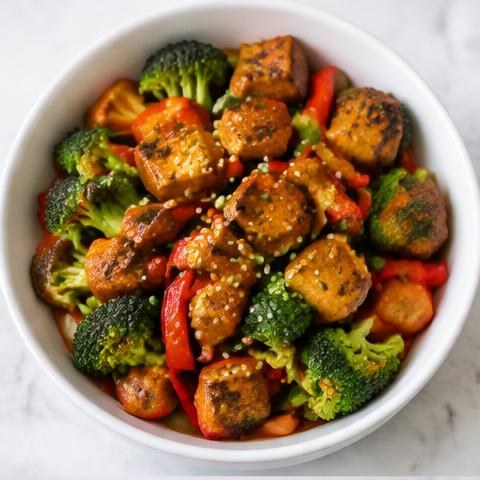
- Prep
- 10 min
- Cook
- 15 min
- Prep + cook
- 25 min
- Serves
- 3
Soaking, resting, cooling and chilling may take extra time; see the cooking guide below. Approximately 410 kcal per serving, excluding optional sides and toppings.
Ingredients
Method
- Toss tofu cubes with cornstarch until evenly coated.
- Heat 2 tbsp oil in a large non-stick pan over medium-high. Pan-fry tofu undisturbed until deeply golden on each side, about 8 minutes total. Remove and set aside.
- Add remaining oil, then bell pepper and broccoli. Stir-fry 4 minutes until just tender.
- Add garlic and ginger, cook 30 seconds. Whisk together soy sauce, maple, rice vinegar and sesame oil, then pour in. Add the slurry and stir until glossy, about 1 minute.
- Return tofu to the pan and toss to coat. Top with sesame seeds and spring onion. Serve over rice.
Cook's notes
- Pressing the tofu is non-negotiable — wetter tofu won't crisp up.
- Swap broccoli for snap peas, baby corn or bok choy.
Why this recipe works
This crispy tofu stir-fry succeeds by balancing textural contrast with a high-impact savory sauce. By using extra-firm tofu that has been properly pressed, you eliminate excess moisture that would otherwise steam the protein rather than crisping it. The cornstarch coating creates a protective barrier that seals in the internal softness while providing a jagged, golden crust that clings to the sauce effectively. This process transforms tofu from a bland base into a compelling, crunchy element that mimics the satisfaction of restaurant-style dishes without deep frying.
The sauce component relies on the interplay of soy sauce for umami, maple syrup for balanced sweetness, and rice vinegar for bright acidity. Adding a cornstarch slurry at the final stage allows the liquid to transition from a thin pool into a viscous, glossy glaze that coats every vegetable and tofu cube uniformly. This technique is critical for a stir-fry, ensuring the sauce does not pool at the bottom of the bowl but instead adheres to the ingredients throughout the eating process.
The 25-minute preparation time is achievable because each component is chosen for its rapid cooking properties. Vegetables like bell peppers and broccoli florets are cut into thin, uniform pieces to ensure they cook through within four minutes, retaining a satisfying crunch without becoming mushy. The order of operations—searing the tofu first, then cooking the vegetables, and finally emulsifying the sauce—ensures that the integrity of the crust is maintained and the aromatics are not burned during the process.
Ingredient choices and preparation
Extra-firm tofu is convenient because it holds its shape during searing. Firm tofu can also work if drained, handled gently and pressed longer where necessary. High-protein or super-firm tofu may need little pressing. Dry the surface before coating with cornstarch: wet cubes can develop a gummy coating. Cut evenly into roughly two-centimetre cubes and leave space between them in the pan so their surfaces brown rather than steam.
Cornstarch is the superior starch for dredging because it creates a thinner, crunchier crust than wheat flour. For the slurry, the ratio of 1 teaspoon of starch to 2 tablespoons of water is engineered to thicken the sauce just enough to coat the ingredients without turning the dish pasty. Always whisk this mixture again right before adding it to the pan, as cornstarch settles at the bottom of the container within seconds, rendering it ineffective if left to sit.
Aromatics like garlic and ginger provide the foundation of the dish's flavor profile. Minced garlic should be finely diced to distribute flavor evenly, while ginger should be grated or minced into a paste to avoid large, pungent chunks. Using toasted sesame oil adds a nutty, deep aroma that is best added at the final stages to preserve its volatile aromatic compounds. Ensure your soy sauce or tamari is of good quality, as it contributes the primary salt and umami base for the stir-fry.
Equipment and kitchen setup
A large non-stick pan or a well-seasoned carbon steel wok is the ideal vessel for this stir-fry. Non-stick surfaces are particularly helpful for the tofu searing stage, as they allow for a deep golden crust to form without sticking to the metal. If using a standard stainless steel pan, you must ensure it is thoroughly preheated and adequately oiled to prevent the cornstarch-coated tofu from bonding to the surface. A 12-inch pan allows enough surface area for the tofu to cook in a single layer.
Precise preparation tools significantly reduce total cook time. A sharp chef's knife is needed to slice the broccoli florets into bite-sized pieces and the bell peppers into thin strips. A microplane or fine grater is the most efficient tool for ginger, as it yields a pulpy consistency that blends seamlessly into the sauce. Having all ingredients measured and prepped in small bowls before turning on the heat is known as mise en place and is mandatory for successful stir-frying due to the rapid cook time.
A heat-proof silicone spatula is the best tool for this dish. It is flexible enough to scrape every bit of the sauce from the sides of the pan and durable enough to handle the high heat of the stir-fry process. Unlike wooden spoons, which can trap flavors, silicone is non-porous and easy to clean. Ensure your workspace is clear and that you have a heat-resistant surface or cooling rack ready for when you remove the seared tofu, as leaving it in the pan will cause it to soften.
Cooking technique in detail
The searing stage requires patience. Once the tofu is added to the 2 tablespoons of oil, you must resist the urge to move it for at least 3 to 4 minutes per side. This 'undisturbed' time is when the Maillard reaction occurs, creating the golden, crispy surface. Flip the cubes only when they slide easily on the pan and display a sturdy, deep-brown crust. If the tofu is stuck, it is not yet ready to be flipped; let it cook for another minute until it releases naturally.
When moving on to the vegetables, the pan heat should remain high to encourage a slight char. Stir-fry the broccoli and peppers continuously to prevent burning while ensuring they reach an al dente state. The addition of the ginger and garlic must be quick—only 30 seconds—to prevent these aromatics from turning bitter. Immediately after they become fragrant, pour in the liquid sauce ingredients. The sugar in the maple syrup will react with the heat, so be ready to introduce the slurry quickly.
The final step, incorporating the slurry, is where the sauce transforms. Once the slurry hits the pan, lower the heat slightly and stir constantly. The liquid will begin to thicken as the cornstarch reaches its gelatinization point. This process happens very quickly, usually within 60 seconds. Once the sauce looks glossy and clings to your spatula, return the tofu to the pan. Toss briefly to ensure the tofu is coated but not drowned, which prevents the crispy crust from soaking up too much moisture and becoming soft.
What to look for
Pressing the Tofu
Tofu should feel noticeably firmer and no longer release water when pressed between paper towels.
Pan-Frying Tofu
Tofu cubes should display a deep, golden-brown crust and slide easily across the pan without resistance.
Sauce Emulsification
The sauce should transform from a thin liquid into a glossy, thick glaze that coats the back of a spoon.
Final Toss
Ingredients should be evenly coated with a shiny sheen, indicating the starch has properly gelatinized.
Serving ideas and variations
Serve the stir-fry immediately while the tofu retains its crunch. A bed of steamed jasmine or basmati rice provides the perfect neutral base to soak up the excess garlic-ginger sauce. If you prefer a lighter option, serve the tofu and vegetables over quinoa or cauliflower rice, though note that cauliflower rice may add moisture and should be cooked until very dry to avoid thinning the sauce consistency.
Garnishes are not just aesthetic; they provide essential textural contrast. Thinly sliced spring onions add a fresh, pungent bite, while toasted sesame seeds introduce a nutty finish that complements the toasted sesame oil in the sauce. For extra heat, add a drizzle of chili oil or a sprinkle of dried red chili flakes before serving. These additions personalize the dish while adhering to the original flavor balance of the garlic-ginger profile.
Variations can easily be implemented by adjusting the vegetable mix. Snap peas, sliced bok choy, or baby corn are excellent additions that cook at a similar rate to bell peppers. If you choose to add denser vegetables like sliced carrots, slice them into paper-thin coins to ensure they cook through within the allotted four-minute stir-fry window. Never add large, raw chunks of root vegetables, as they will remain crunchy and raw by the time the rest of the dish is finished.
Make ahead, storage and reheating
This dish is best enjoyed immediately after cooking. If you must store leftovers, keep the tofu and vegetables in an airtight container in the refrigerator for up to 3 days. Note that the cornstarch crust will inevitably lose its crispiness over time as it absorbs the sauce. This is a common property of starch-based coatings when exposed to moisture in a refrigerated environment. Refrigerate cooked perishables promptly within 2 hours of preparation to maintain food safety standards.
To reheat, avoid the microwave, which will turn the tofu mushy. Instead, reheat in a hot pan over medium heat for 2-3 minutes. If the sauce has thickened too much in the fridge, add a tablespoon of water or soy sauce to loosen it. Reheating to an internal temperature of 74 C is required for safety. While you can technically freeze the stir-fry, the texture of the tofu will change significantly, becoming spongy or crumbly, which is why freezing is generally not recommended for this specific recipe.
To minimize texture loss, you can prepare the sauce and chop the vegetables a day in advance, storing them in separate containers. Keep the tofu pressed and cubed in the fridge, but do not apply the cornstarch coating until just before you begin cooking. Applying the starch too early will cause it to hydrate from the surface moisture of the tofu, leading to a pasty texture instead of a crisp one. This preparation strategy maintains the integrity of the dish while still saving time on the final day.
Nutrition and allergen notes
Each serving contains approximately 410 calories. This dish provides a substantial amount of plant-based protein from the tofu and dietary fiber from the broccoli and bell peppers. It is naturally vegan, assuming you use maple syrup instead of honey. Always verify that your soy sauce or tamari is gluten-free if you are catering to a gluten-sensitive diet, as standard soy sauce contains wheat. Tamari is typically a reliable gluten-free alternative, but checking labels remains necessary.
Allergens present in this recipe include soy (found in tofu and soy sauce) and potentially sesame (if using sesame oil and seeds). While tofu is a soy-based product, individuals with soy allergies cannot consume this dish safely. Those with sesame allergies can omit the toasted sesame oil and sesame seed garnish without compromising the structure or the cooking process of the stir-fry, though the flavor profile will be less complex. There are no common tree nut or dairy allergens included in the core formula.
Because this recipe relies on soy sauce and optional salt, it is relatively high in sodium. You can manage the sodium content by using low-sodium soy sauce or reducing the amount of soy sauce and compensating for volume with a small amount of vegetable broth. Ensure all fresh produce is washed thoroughly before cutting. Since this dish relies on high-heat cooking, do not leave the pan unattended, as the sugar in the maple syrup can caramelize and burn very rapidly if the temperature is too high.
Ingredient substitutions
- Broccoli → Snap peas
- Use the same volume; cook for 3 minutes instead of 4 as they are more delicate.
- Maple syrup → Agave nectar
- Use a 1:1 ratio; ensure you monitor heat closely as agave burns slightly faster.
- Soy sauce → Tamari
- Use a 1:1 ratio; this is a direct swap for a gluten-free outcome.
- Cornstarch → Arrowroot powder
- Use a 1:1 ratio for dredging; for the slurry, use slightly less as it thickens more aggressively.
Troubleshooting
Tofu is soggy instead of crispy.
Insufficient pressing or overcrowding the pan during frying.
Press tofu for at least 15 minutes next time and fry in batches to ensure air circulation.
Sauce is too thin and watery.
The cornstarch slurry was not whisked before adding or the heat was too low.
Mix another half-teaspoon of cornstarch with water and add to the pan over medium-high heat.
Tofu sticks to the pan.
Pan not hot enough or attempt to flip too early.
Increase heat and wait until a crust naturally releases from the surface before moving the pieces.
Vegetables are mushy.
Cooking for too long or overcrowding the pan.
Add vegetables only when the pan is very hot and stir-fry quickly for exactly 4 minutes.
Recipe questions
How long do I need to press the tofu?
Press the tofu for at least 10 minutes. Use a tofu press or wrap the block in a clean kitchen towel and place heavy items like cast iron pans on top. This removes water that would otherwise prevent the cornstarch from crisping up. If you skip this, the tofu will steam in its own moisture, resulting in a soft, lackluster texture that ruins the desired restaurant-style crunch.
Can I make this dish without soy sauce?
If you are allergic to soy, you can substitute coconut aminos. Use an equal amount, but be aware that coconut aminos are naturally sweeter than soy sauce, so you may want to reduce the amount of added maple syrup in the recipe. The salty, umami profile will be slightly different, so taste your sauce mixture before adding it to the pan to ensure it meets your personal preference for saltiness.
Does this dish keep well for meal prep?
While the taste remains good, the texture will degrade as the crispy tofu absorbs the sauce. To maximize quality, keep the tofu and the saucy vegetables in separate containers if possible, and combine them only when you are ready to serve. Even then, the crunch will not match that of a fresh batch. Reheat leftovers to 74 C in a pan to ensure safety and restore some of the heat.
Can I use frozen tofu?
Freezing tofu changes its cellular structure, making it chewier and more sponge-like, which absorbs sauce better. If you prefer this texture, thaw the frozen tofu completely and press out all the water before proceeding. The searing time might be slightly longer to achieve the same golden-brown exterior compared to fresh tofu. It is a great way to change the mouthfeel of the dish while maintaining the same savory flavor profile.
Why did my garlic burn during stir-frying?
Garlic burns quickly because it contains natural sugars and is cut into small pieces. To prevent this, add your minced garlic and grated ginger only during the last 30 seconds of the vegetable stir-fry stage. Ensure your pan is not overly dry before adding them, as the small amount of oil remaining will help transfer the heat evenly and prevent the garlic from sticking directly to the metal and scorching.
Replace the job, not just the ingredient
An egg can bind a burger, enrich a cake or create the foam in a meringue. Those jobs need different substitutes: ground flaxseed can help with binding, while aquafaba is useful for whipping.
Review the rewritten method as well as the ingredient list. Changing the amount of liquid, the cooking temperature or the resting time can matter as much as the substitute itself.
- A practical example
- For a creamy pasta, try unsweetened plant cream or blended silken tofu; add acidity and seasoning to taste rather than relying on a cheese substitute alone.
- What to keep in mind
- Substitutions can change allergens, texture and nutrition. Test a small batch before making a dish for guests.
Plan around the week you actually have
Begin with your busiest evenings and choose quick meals for those days. Use slower recipes when you have time, and let overlapping ingredients connect meals rather than planning seven unrelated shopping trips.
Check your pantry before shopping. Choose a protein source, a grain or other starchy food, and vegetables for each main meal; then adjust portions and leftovers for the people eating.
- A practical example
- Roast vegetables for dinner, use the remaining vegetables in a chickpea bowl, and turn spare rice into a quick tofu stir-fry.
- What to keep in mind
- A plan is a starting point, not a prescription. Check food-storage advice and adjust it for allergies, appetite and dietary needs.
Read the pattern, not just one number
Portion size, brand and preparation method change the numbers in a food log. Check whether an entry describes cooked or dry food, and choose the closest match to what you actually ate.
Look across several days rather than judging one meal. Protein and fibre matter, but so do reliable sources of vitamin B12 and attention to calcium, iodine and vitamin D in a plant-based diet.
- A practical example
- For a lentil bowl, log the cooked lentils, grain, dressing and toppings separately when their amounts are known.
- What to keep in mind
- Food logs are estimates and may not capture every nutrient. Supplement needs and targets should be discussed with a qualified professional when appropriate.